When reporter Pete Stoddard visited two old Camden County houses for The Daily Advance, the distinction between them mattered. The Williams house had lost part of its roof and much of its interior. John B. Wells, of the state's Department of Archives and Historical Sites, doubted that it had a future. At the brick house associated with General Isaac Gregory, he reached a different conclusion. Here, he believed, enough survived to make restoration worthwhile.[1]
Stoddard photographed the Gregory house standing in an open field, vines climbing its walls. Another photograph looked through an empty interior toward an outside doorway. The newspaper's caption insisted that the deteriorating house could still be saved. Wells had recently joined a three-man state team that examined nine houses in the Albemarle. For this one, the surviving walls, floors, stairways, and portions of the wainscoting offered a practical beginning.[1]
Jesse Forbes Pugh had made much the same appeal in 1957. His chapter on Gregory ended at Fairfield, already abandoned and stripped of paneling and mantels. He called attention to the building's Georgian architecture and hoped that restoration might come before it was too late. The newspaper clipping shows that the question remained open years afterward. Its copies in this collection are labeled 7 November 1971, although the surviving clippings do not show a masthead or printed date.[1, 2]
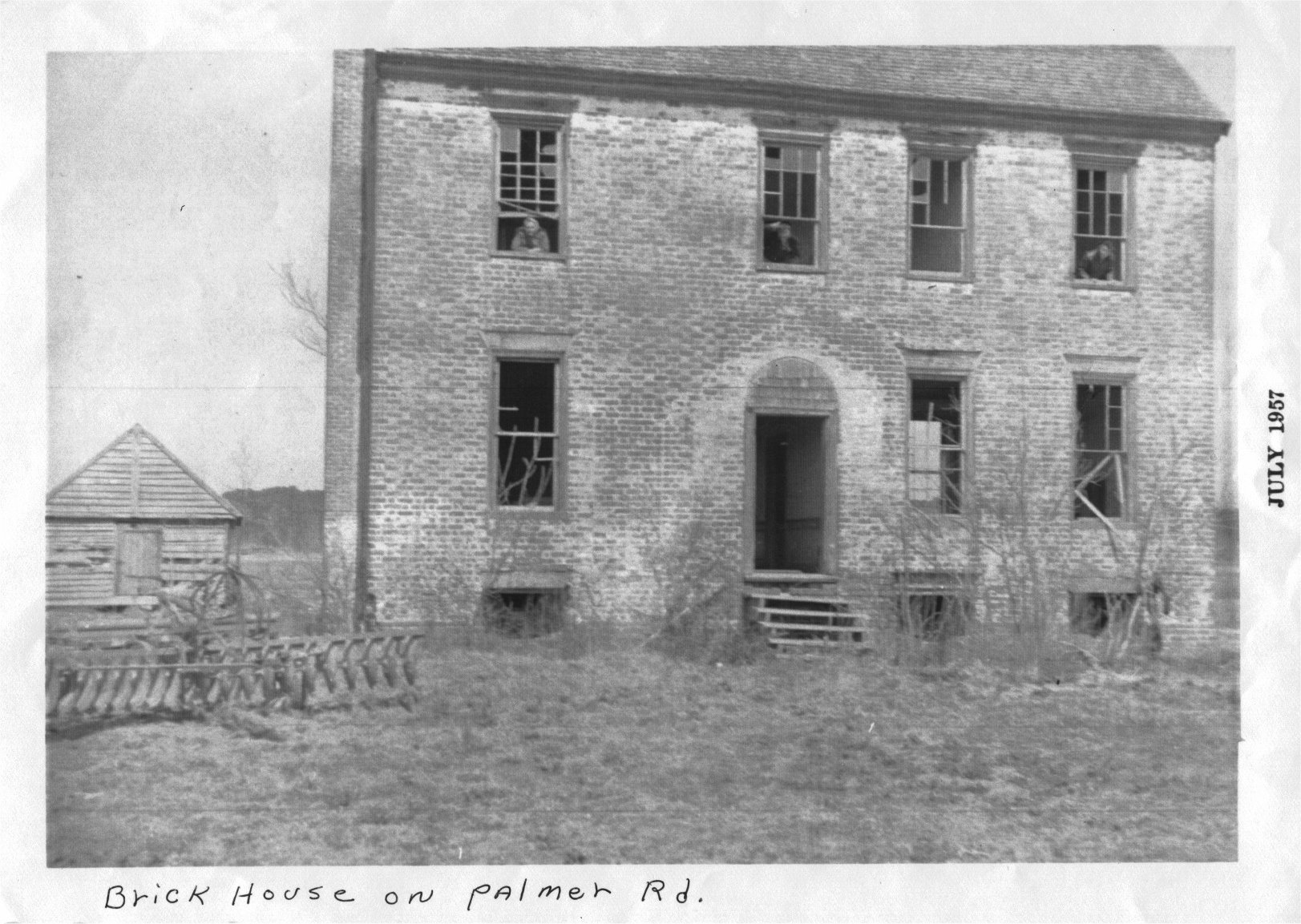
A house built more than once
The house appears in records under several names: the General Isaac Gregory House, Fairfield, Fairfield Hall, and Fairfax. Those names have sometimes traveled with confident claims about its age. One modern photograph catalog gives 1735; a later biographical account places it in the 1740s. Neither supplies a construction contract or a dated account for the work.[4, 12]
The architectural evidence tells a more interesting story than a single year. The Historic American Buildings Survey recorded an early-eighteenth-century brick house substantially altered about 1785. Its description identifies Flemish-bond brickwork, a roof raised to accommodate another full story, and changes to openings and floor levels. It also records a detached kitchen. The familiar house in the photographs was therefore the product of successive work, not necessarily the building first erected on the site.[3]
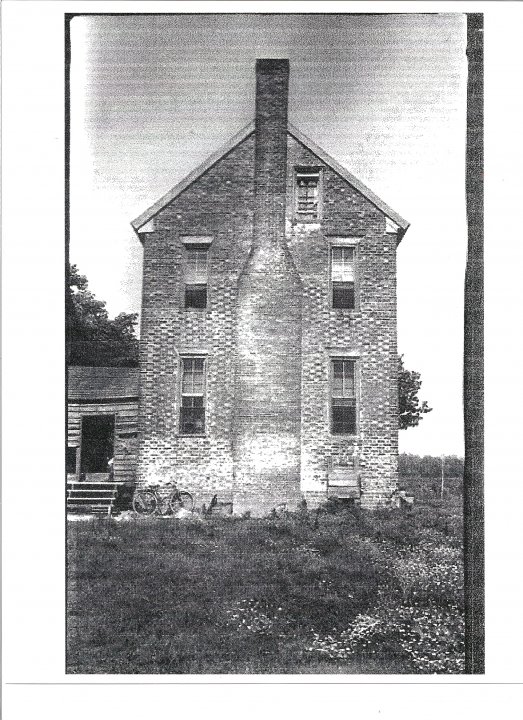
Wells offered a more specific interpretation in Stoddard's article. He dated the earliest house to the 1720s and believed it had begun as a one-story brick dwelling with one chimney. Additions on either side and an increase to two stories brought it to the form seen in the photographs. He placed the alteration in 1785. Pugh, also interviewed, pointed to differences in the brickwork as evidence of change.[1]
These observations support an early house followed by a substantial late-eighteenth-century rebuilding. They do not yet establish an exact first construction year. The safest description is an early-eighteenth-century brick house, substantially altered around 1785, with the 1720s retained as Wells's published estimate. The distinction matters because it changes the question from who built the photographed house to who was responsible for each stage.[1, 3]
Pugh himself did not know the original builder. He proposed William Gregory, Isaac's father, or another prosperous planter such as Colonel Thomas Hunter, but expressly called the matter conjecture. The names identify possible owners who might have commissioned construction. They do not identify the brickmakers, masons, carpenters, or other people who did the work. No such craftsman has yet been securely named.[2]
Elsewhere, Pugh supplies local land history involving Hunter. In his account of Hunter’s mill on Arenuse Creek, he describes purchases of one hundred acres from Griffith Jones and another hundred from William Gregory, followed by a sale of the mill and plantation to Samuel Swann in 1758. These are useful title leads, but the mill property has not been identified as Fairfield. Hunter remains a possible person who commissioned the house, not its established builder.[2 (p. 49)]
The circa 1785 enlargement falls within Isaac Gregory's lifetime. That makes his association with the enlarged house important, but the date alone is not a building account. We cannot yet say whether he ordered every alteration, employed a particular builder, or incorporated work begun by an earlier owner. A deed chain, estate inventory, or surviving account could change that answer.[1, 2, 3]
Gregory's Camden
Gregory belonged to the generation that knew this country first as part of Pasquotank and then, after the division in 1777, as Camden. His public life crossed that change. He served as a justice and sheriff under the colonial government, represented Pasquotank in the final royal Assembly, and took part in the provincial congresses through which North Carolina moved toward independence.[2]
He was not always willing to follow the political majority without objection. In 1775, when the congress condemned Thomas MacKnight for refusing the required association, Gregory joined the delegates who withdrew in protest. His defense of MacKnight did not prevent his subsequent service for the American cause. The episode places him among men whose local associations and political choices could be more complicated than the later labels Patriot and Loyalist suggest.[2]
The work of raising troops brought a different kind of difficulty. In a letter dated 7 June 1780, preserved in a later transcription of the state records, Gregory told Governor Abner Nash that some counties were responding well to the draft and others slowly. Weapons were a greater problem: colonels were reporting that they could not obtain them. His letter describes the practical business behind the military title—assembling men, finding arms, and trying to send a force forward.[5]
At the Battle of Camden in South Carolina, that work became personal danger. Gregory was wounded and lost his horse. Pugh's account records the legislature's subsequent provision of a replacement mount and the erroneous British report that Gregory had been killed. This Camden was the South Carolina battlefield, not his home county in North Carolina.[2]
The next year brought a threat to his reputation. A fictitious letter written by the British officer Stevenson suggested that Gregory might betray the American forces. Pugh told the story as a letter left in an abandoned camp, but the earlier published account by John Graves Simcoe places its discovery among baggage captured with a gunboat. The surviving published correspondence supplies a firmer point: on 4 March 1781 Simcoe assured Colonel Parker that Gregory was loyal to the American side. Parker replied the next day that he believed him and had forwarded the explanation to Steuben.[6]
That exchange supports the falsity of the supposed conspiracy. It does not supply a recovered court-martial judgment, nor does it tell us how Gregory felt about the accusation. His later career is more substantial evidence of his continuing place in public affairs. He represented Camden in the House of Commons and Senate and participated in the conventions of 1788 and 1789 that considered the federal Constitution. He also worked on education, navigation, and the customs business of the district.[2]
The household behind the general
Pugh’s fuller account gives Fairfield a place in the business of the new state. In 1782, he reports, Thomas Humphries received a patent for forty acres between Rowland and Sawyers Creeks. Governor Alexander Martin’s approval bore the words “Done at Fairfield.” Pugh identifies Martin as Gregory’s guest. The patent itself has not yet been inspected, but this specific reference gives substance to his broader description of governors visiting the house.[2 (p. 82)]
Pugh adds a religious gathering to his account of Gregory’s household. The journal extract printed in Minton Thrift’s 1823 memoir of Jesse Lee now gives us an earlier published account of that visit. On 13 December 1782, Lee and his companion, identified by Pugh as Edward Dromgoole, preached at Indian Town and crossed North River. That night a large congregation assembled in General Gregory’s dwelling. The published passage does not name Fairfield, so the association with this particular house remains contextual rather than explicit. It records use of Gregory’s dwelling without establishing his personal attendance.[2, p. 118; 17]
Pugh gives Gregory’s daughter Mary a part in this hospitality. In his later account of the Sawyer family, he says that she had assisted from youth in entertaining Fairfield’s distinguished visitors. Her experience as a hostess thus began, in his telling, in her father’s house.[2 (p. 130)]
The family records also require us to look beyond the general. The identification of the wills' Isaac with the adult general is a Moderate-confidence working conclusion, supported by the matching family structure but still requiring original-source and namesake checks. A published transcription of William Gregory's will, dated 24 November 1751 and proved in April 1752, names his son Isaac and leaves him an interest in the home plantation, estimated at 280 acres. Its bounds mention the Indian Town line, Ivy Neck, and Ivy Point. Among the people subjected to inheritance were Sam, Seasar, and Sarah. Seasar is described as sixteen; Sam's disposition depended on Judith's marriage or death. A separate adult Seasar also appears in the will. None has been identified as a builder of Fairfield, and the inherited tract has not yet been securely tied to its footprint.[7]
Judith Gregory's will, dated 21 October 1753, offers another glimpse of the household. In the surviving online transcription she leaves Isaac her new desk, names four children, and appoints her brother Joseph Morgan executor. The desk is a small, specific possession amid the larger story of land and military service. It cannot be placed in a particular Fairfield room, but it belongs to the documented family inheritance that preceded Gregory's public career.[8]
The 1790 census supplies a later measure of Gregory's slaveholding. In the 1908 published transcription, the entry explicitly headed “Gregory, Genl Isaac” returns twenty-three enslaved people. It does not give their names, work, or precise location. They cannot all be placed inside or around the photographed house merely because their enslaver lived there.[11]
These wills support the family described below while leaving a separate task: tracing the named young Isaac into the adult general through the original records and land succession. The distinction is especially necessary in a family that repeatedly used the same names.[7, 8]
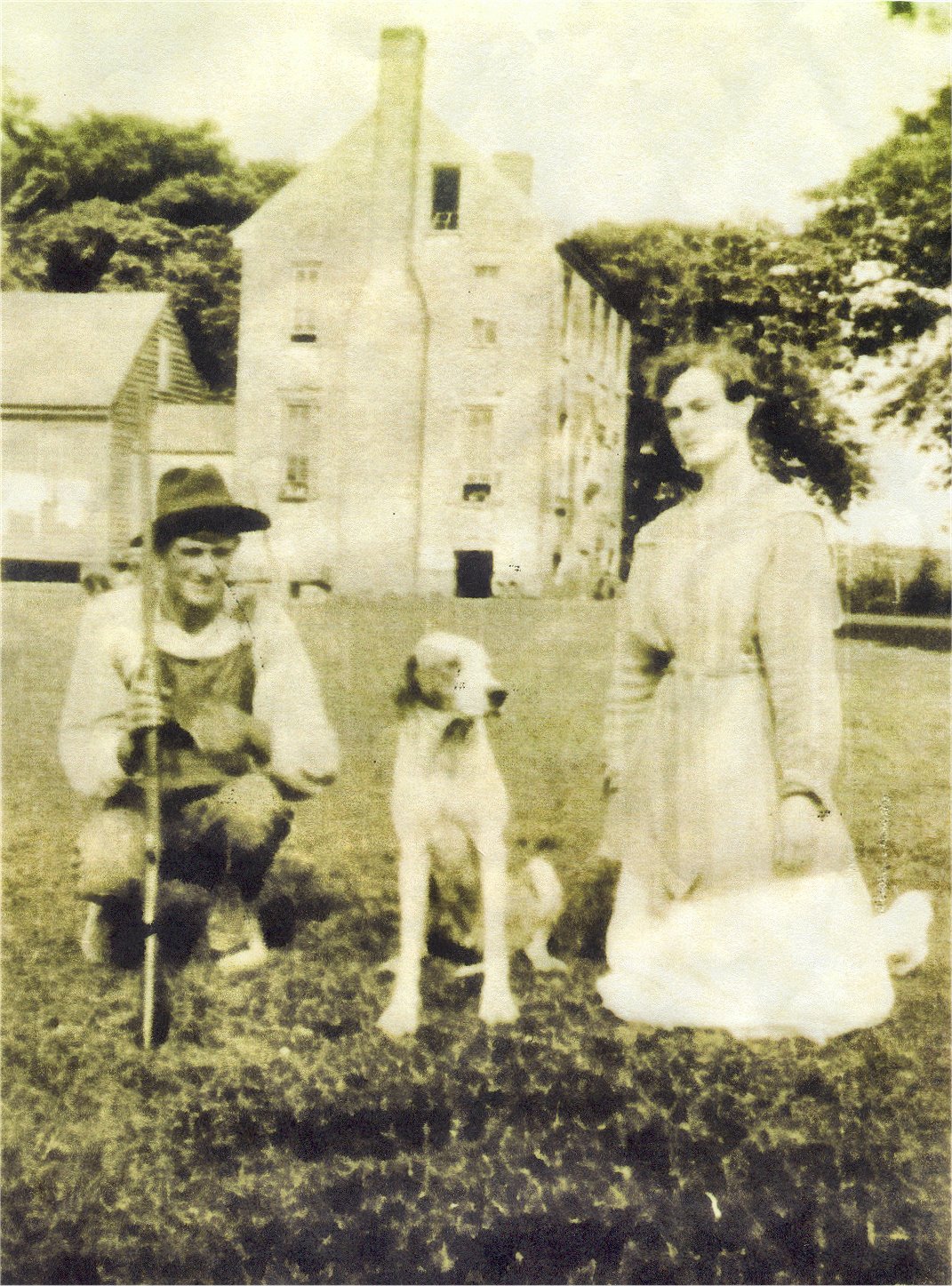
The chance to save it
Fairfield’s association with public life continued after Gregory. Pugh records that William Biddle Shepard arrived in Camden in 1824 to practice law and purchased the six-hundred-acre Fairfield plantation. He does not securely date the purchase to the year of arrival. Shepard, who won a seat in Congress in 1828, seems in Pugh’s account to have remained at Fairfield until after 1830 before moving to Elizabeth City. The old general’s home had become the residence of another man representing this region in public affairs.[2 (p. 139)]
By the time of Stoddard's article, the house's future depended on more than the condition of the brickwork. Miss McPherson, whose deed research the reporter described, traced an earlier ownership through Samuel Ferebee, who had bought from Dr. Smith Hoskins. Her account carried the property through Ferebee's heirs to Mrs. Gideon Marchant Tillitt and then to six children. Phillip P. Gregory reportedly acquired the interests of all but Mrs. Gideon Godfrey. A later disposition involving Godfrey and Mr. Patrick of Shawboro had left the ownership entangled in litigation.[1]
That is a reported title history, not yet a deed-by-deed reconstruction. It nevertheless explains the obstacle the newspaper placed beside the restoration proposal: ownership had to be settled before the future of the building could be clear. The state visitors could assess the house, but an architectural opinion alone could not resolve competing property interests.[1]
Pugh hoped a favorable assessment would bring National Register recognition and visitors. Wells believed the surviving fabric justified restoration. The article records those hopes; it does not demonstrate that the house was nominated, listed, or restored. Its photographs preserve the condition in which the opportunity was being discussed.[1]
Later reporting describes a different outcome. In a 2011 article republished by Camden County, Jeff Hampton reported that the house had remained occupied into about the 1950s, stood for roughly another thirty years, and eventually became rubble. This supplies an approximate account of its loss rather than an exact demolition or collapse date. Statements in older books that the house was still standing must be read with their publication dates attached.[9]
The photographs now carry much of what Wells hoped the building itself would retain. Thomas T. Waterman's July 1940 survey photographs, a local print marked July 1957, and Stoddard's exterior and interior views record different stages in its survival. They allow the changing walls and openings to be examined again. They also preserve a moment when people who had seen the house at close range thought its loss could still be prevented.[1, 3, 9, 15]
Family Ties
The working identification of William Gregory and Judith Morgan as the general's parents is Moderate confidence: it is supported by the specific family described in the biographies and the converging will transcriptions, while original-source and namesake checks remain incomplete. The 1751 and 1753 will transcriptions name a son Isaac; Judith also names Demsey, Mary, and Lovey. Identifying that family-record Isaac with the general requires the source and identity qualifications recorded in the research report.[2, 7, 8]
The second marriage to Sarah Lamb and the six named children below are also retained at Moderate confidence as the best-supported working reconstruction from the principal biographies. Pugh leaves the first wife unnamed. The later Dictionary of North Carolina Biography suggests that the first wife may have been a daughter of Caleb Sawyer. That remains a possibility, not an identified marriage. Conflicting later accounts do not yet resolve her name.[2, 4]
Pugh lists six children: William, Isaac, Mary, Sarah, Penelope, and Harriett. He gives Martha Long as William's wife and Enoch Sawyer as Mary's husband. He associates both Sarah and Penelope with a Nathan Snowden, but that alone does not establish whether the same man married both sisters. The list does not identify which wife was the mother of each child.[2]
Between the Lines
Possibilities, not proven relationships.
Who commissioned the first house? Pugh's William Gregory and Thomas Hunter suggestions remain Possible. Early ownership and architectural dating make this a useful investigation, but neither name is attached to a recovered construction record. The next test is the chain of title to the specific site, including buildings described in deeds and estate papers.[2, 3]
Was the circa 1785 work Gregory's own building campaign? It is Possible. The date falls during his adult life and fits the known association of the house with him, but a remodeling date is not proof of the person who ordered it. Accounts, contracts, correspondence, or a dated property description could settle the point.[1, 2, 3]
How does the 1751 inheritance connect to Fairfield? William's will provides a tract to trace, not a proved house site. The Indian Town line, Ivy Neck, and Ivy Point boundary language must be followed through actual bounds and conveyances before the inheritance can be placed beneath the photographed building.[7]
A Life in the Records
This is the presently identified evidence inventory, not a claim that every surviving record has been found. Source and evidence status are specified in each entry; a reported lead is not a completed original-record check.
| Date | Evidence and meaning |
|---|---|
| Birth unknown; published estimates circa 1737 or circa 1740 | NCpedia and Pugh give different approximate years. Neither is an exact recorded birth date.[2, 4] |
| 24 November 1751 | William Gregory's will names son Isaac; online transcription inspected. Identity to the future general is a separate proposition.[7] |
| April 1752; 27 June 1752 | Reported proof of William's will, followed by letters dated 27 June. Neither is his exact death date.[7] |
| 21 October 1753 | Judith Gregory executes a will naming Isaac, Demsey, Mary, and Lovey; online transcription inspected.[8] |
| 12 January 1754 | Administrative date appearing in Judith's transcribed probate material; not her exact death date.[8] |
| 1758 — unconnected parcel lead | Pugh reports Hunter’s sale of his mill and plantation to Samuel Swann. The tract, assembled from purchases from Griffith Jones and William Gregory, has not been identified as Fairfield.[2 (p. 49)] |
| 1765 | Justice and Stamp Act protest reported in the later biography.[4] |
| 1769–1770 | Collector of public debts, reported in the later biography.[4] |
| 1770 and 1773 | Sheriff appointments reported; Pugh describes eight appointments overall.[2] |
| 1773 | Trustee for St. Martin's chapel, reported in the historical-marker essay.[13] |
| 1775–1776 | Colonial Assembly and provincial-congress service; MacKnight protest belongs to April 1775.[2] |
| September 1775; approximately April 1776 — conflicting secondary sequence | NCpedia reports lieutenant-colonel commission in September and colonel promotion seven months later. April is calculated; Pugh places a colonel appointment earlier. Original commissions are needed to reconcile the sequence.[2, 4] |
| 1777 | Camden's creation changed the county affiliation of his lands; committee service concerning public buildings is reported in the historical-marker essay.[13] |
| 12 March 1779 | Surviving local militia-return image names Isaac Gregory as commanding officer; dated heading inspected.[10] |
| 12 May 1779 | Election as brigadier general reported in the historical-marker essay; original legislative record remains to be checked.[13] |
| 7 June 1780 | Letter to Governor Nash about recruitment and shortage of arms, read in a later printed transcription.[5] |
| 16 August 1780 | Battle of Camden, South Carolina; Gregory's wounds and lost horse are reported in the principal biographies.[2] |
| 11 September 1780 — calculated retrieval lead | Pugh places the horse-replacement resolution twenty-six days after the battle. The calculated date has not been verified against a legislative journal.[2] |
| November 1780 | Return to regional defense and a mounted force, reported in the later historical-marker account.[13] |
| 1780–1781 | Camden House of Commons service reported in the later biography.[4] |
| 2 March 1781 — unverified reported lead | Parker report discussed by Michael Cecere, citing the later published Muhlenberg biography; underlying page not inspected.[14] |
| 4–5 March 1781 | Simcoe–Parker correspondence concerning the fictitious treason letter, read in a modern transcription of Simcoe's published account.[6] |
| 11 March 1781 — unverified reported lead | Muhlenberg's continuing uncertainty is discussed by Cecere, citing the later biography; underlying page not inspected.[14] |
| 1782 | Trustee of Smith Academy, reported in NCpedia. Separately, Pugh reports Thomas Humphries’s forty-acre patent between Rowland and Sawyers Creeks bearing Governor Alexander Martin’s approval “Done at Fairfield,” and identifies Martin as Gregory’s guest; underlying patent uninspected.[2 (p. 82)][4] |
| 13 December 1782 | Lee’s journal extract in Thrift’s 1823 published memoir records the nighttime congregation in General Gregory’s dwelling after the Indian Town visit and North River crossing. Printed p. 47 and the 1782 context on pp. 42–43, 45 inspected; manuscript journal uninspected. Fairfield is not named.[2, p. 118; 17] |
| 1782–1795 | Ten Senate terms reported; this is not continuous annual service throughout that interval.[4] |
| Circa 1785 | Architectural estimate for substantial work at the house; it is not a dated personal appearance by Gregory.[1, 3] |
| 1786 | Pugh reports committee work on Philip Alston's eligibility for the Senate.[2] |
| 1787–1788 | Navigation commission service reported.[4] |
| 1788 and 1789 | Constitutional-convention service reported.[2] |
| 1789 | Currituck Seminary of Learning trusteeship reported.[2] |
| 5 February 1790 — reported lead | Williamson's recommendation to Washington, cited in Pugh's source list; the underlying application has not been inspected for this draft.[2] |
| 1790 | Rank-labeled census entry returns twenty-three enslaved people; inspected in the 1908 printed transcription.[11] |
| 1792 — reported lead | Pugh's canal discussion records two Dismal Swamp Canal shares; underlying subscription record not inspected.[2] |
| 1793 | Customs-collector activity and a schooner seizure reported in NCpedia.[4] |
| April 1800 | Death reported in the later biography; exact day not established here. Pugh's source list identifies a Raleigh Register notice of 22 April 1800 for follow-up.[2, 4] |
| Mary Gregory’s youth — undated retrospective account | Pugh reports her assistance in entertaining visitors at Fairfield; this does not date an individual gathering or place the later presidential visit there.[2 (p. 130)] |
| 1824 and after — later ownership | Pugh dates William Biddle Shepard’s arrival in Camden to 1824, then reports purchase of six-hundred-acre Fairfield without securely dating the conveyance. Shepard won a congressional seat in 1828; Pugh says he seems to have resided at Fairfield until after 1830.[2 (p. 139)] |
| July 1940 | Waterman's HABS photographs document the house long after Gregory's death.[3] |
| 1957 | Pugh describes the abandoned house and hopes for restoration.[2] |
| Undated clipping; collection filenames say 7 November 1971 | Stoddard's article records the preservation assessment, photographs, and ownership dispute. Issue date not authenticated from a visible newspaper date.[1] |
| 2011 | Hampton's later reporting describes the house's loss approximately three decades after its last occupation in the 1950s.[9] |
The Family as We Currently Understand It
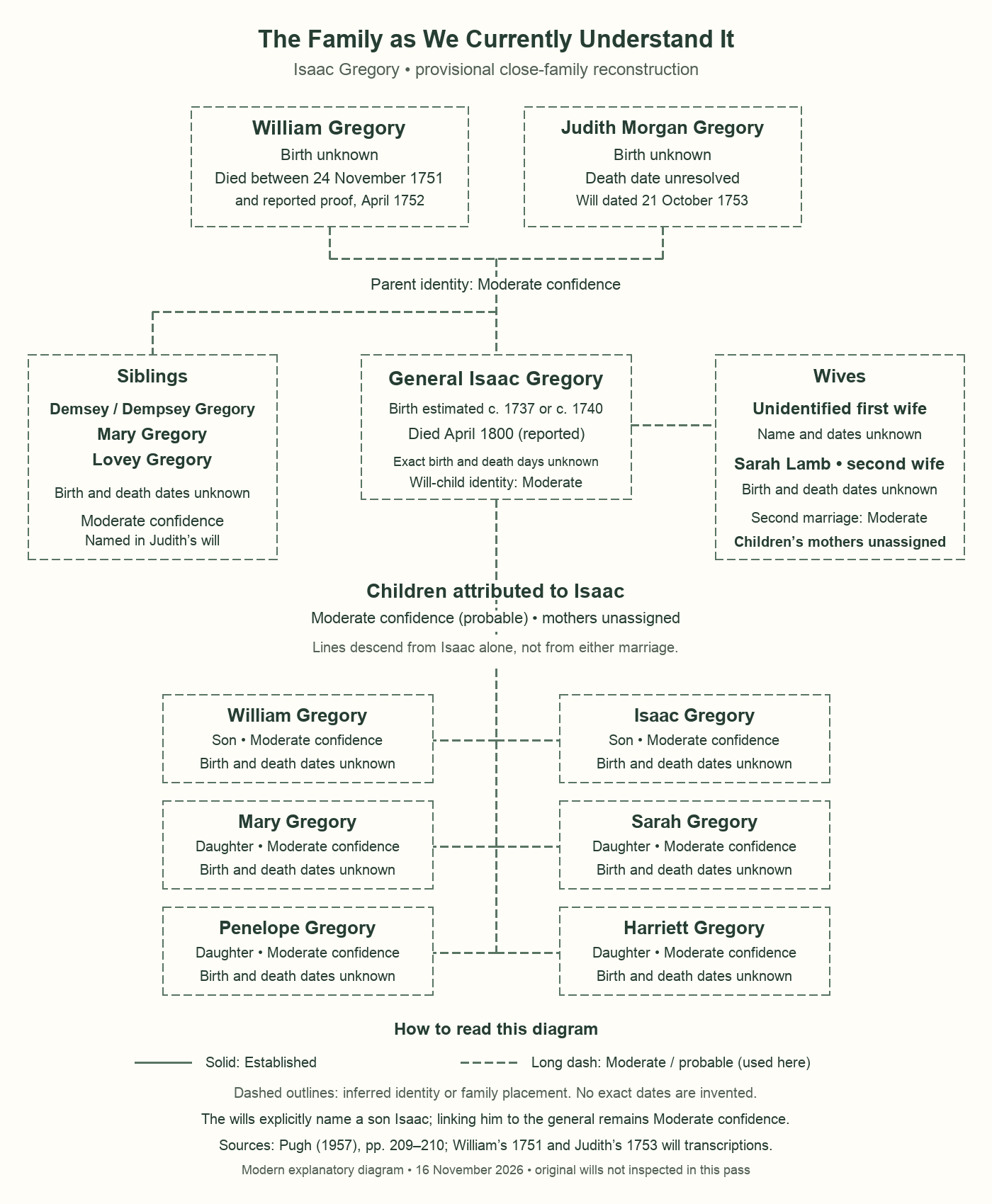
The close family is shown below. Long-dashed connections mark Moderate-confidence identifications; the children’s mothers are not assigned.
| People | Relationship to the general | Present source basis and qualification |
|---|---|---|
| William Gregory — birth unknown; died between will execution 24 November 1751 and reported proof April 1752 | Father | Pugh's identification; will transcription explicitly names son Isaac. Cross-record identity requires the review's qualification.[2, 7] |
| Judith Morgan Gregory — birth unknown; death date unresolved | Mother | Pugh's identification; Judith's will explicitly names Isaac as son. The administrative date in January 1754 is not an exact death date.[2, 8] |
| Demsey/Dempsey Gregory — dates unknown | Brother | Judith's will names him among her four children; general's sibling identity remains source-qualified.[4, 8] |
| Mary Gregory — dates unknown | Sister | Named in Judith's will; later spousal and generational identifications are not silently added.[8] |
| Lovey Gregory — dates unknown | Sister | Named in Judith's will.[8] |
| Unidentified first wife — dates unknown | Wife | Name Unknown; possible Sawyer connection remains a hypothesis.[2] |
| Sarah Lamb — dates unknown | Second wife | Pugh's and NCpedia's reported marriage; original marriage evidence not inspected.[2] |
| William Gregory — dates unknown | Son | Reported by Pugh; associated there with Martha Long.[2] |
| Isaac Gregory — dates unknown | Son | Reported by Pugh; retain separately from his father and other namesakes.[2] |
| Mary Gregory — dates unknown | Daughter | Reported by Pugh; associated there with Enoch Sawyer.[2] |
| Sarah Gregory — dates unknown | Daughter | Reported by Pugh; Nathan Snowden association requires checking.[2] |
| Penelope Gregory — dates unknown | Daughter | Reported by Pugh; Nathan Snowden association requires checking.[2] |
| Harriett Gregory — dates unknown | Daughter | Reported by Pugh; later identity untraced.[2] |
The parental, sibling, second-marriage, and child identifications shown here are Moderate confidence. The will relationships are explicit in the inspected transcriptions; that does not turn the uninspected originals or every later identity link into Established findings. The first wife's name is Unknown; the Sawyer connection is Possible. The children's mothers are not assigned. No unsupported first-wife name receives a connector.
Sources
1. Pete Stoddard, text and photographs, The Daily Advance, article concerning the Williams and Isaac Gregory houses; three supplied clipping images. Local copies: Old Buildings and Houses/Albemarle Life Past Testimony Revealed in Old Houses part 1.jpg, part 2 11-7-1971.jpg, and part 3 11-7-1971.jpg (full common filename prefix retained in the collection). The collection assigns 7 November 1971; no issue date or full masthead is visible. Images directly inspected. Wells's construction estimate, restoration comments, and Miss McPherson's ownership account are attributed statements, not recovered building contracts or deeds.
2. Jesse Forbes Pugh, Three Hundred Years Along the Pasquotank: A Biographical History of Camden County (1957), pp. 92–97, family appendix pp. 209–210, source list pp. 225–226; Hunter mill-land context p. 49; Humphries grant p. 82; canal shares p. 113; Methodist gathering p. 118; Mary Gregory’s hospitality p. 130; William Biddle Shepard’s ownership p. 139. ECU Digital Collections, item 17076. Principal text read; relevant book images independently checked. House and builder discussion is p. 97. Saved full PDF and page renders are in the research source catalog.
3. Historic American Buildings Survey, HABS NC-48, General Isaac Gregory House, also called Fairfield Hall, State Route 1121, Camden vicinity; two photographs by Thomas T. Waterman, July 1940, and undated written data. Library of Congress catalog; written data PDF, second PDF page. Data checked through extracted PDF text; attempted screenshot did not provide an inspectable image. Architectural assessment, not a construction contract. Catalog uses initial construction after 1700 and subsequent work circa 1785.
4. William S. Powell, “Gregory, Isaac,” Dictionary of North Carolina Biography (1986), reproduced by NCpedia. Secondary biography. Its description of the house as still standing belongs to the article's publication era.
5. Isaac Gregory to Abner Nash, Camden County, 7 June 1780, reproduced in Carolina Trees & Branches III (1994), p. 26, citing State Records of North Carolina, XIV. Saved transcription in RESEARCH/sources/2026-11-16-isaac-gregory/life/L08-CTB-1994-letter-extract.txt; original letter image not inspected.
6. John Graves Simcoe, published journal, narrative transcription, represented p. 181, and appendix transcription, represented pp. 298–299, including Simcoe to Parker, 4 March 1781, and Parker to Simcoe, 5 March 1781. Modern transcription of a published primary account; manuscript originals and printed edition images not inspected in this pass. Pagination varies by edition.
7. William Gregory will, 24 November 1751, reported proof April 1752, NCGenWeb transcription. Online transcription, not original-record-image inspection; contemporary jurisdiction Pasquotank.
8. Judith Gregory will, 21 October 1753, with January 1754 probate/administrative material, NCGenWeb transcription. Online transcription; placement on a Camden website does not make Camden the contemporary county in 1753.
9. Jeff Hampton, The Virginian-Pilot, 14 August 2011, republished as “Brigadier General Isaac Gregory,” Camden County. Later reporting, including recollections concerning occupation and loss; not a dated demolition record.
10. Camden militia return, heading 12 March 1779, Isaac Gregory commanding officer; local original-record image Camden County/Military Records/MilColl_Troop_Returns_B3F30_Camden_Return_of_militia_divisions_Gregory_01.jpg. Image heading inspected by the life researcher; full roster not transcribed for this story.
11. U.S. Bureau of the Census, Heads of Families at the First Census of the United States Taken in the Year 1790: North Carolina (Washington, 1908), p. 17, entry “Gregory, Genl Isaac.” Full printed-page image independently checked; original 1790 manuscript schedule not inspected. Local render: RESEARCH/sources/2026-11-16-isaac-gregory/life/L07-1790-full-017.png.
12. “Isaac Gregory Home,” DigitalNC record 238131, Camden County Heritage Museum photograph record; catalog caption gives 1735 without a displayed construction record. Caption evidence, not an authenticated building date.
13. North Carolina Department of Natural and Cultural Resources, “Isaac Gregory (A-30)”, 1 December 2023. Later historical-marker essay; derivative biography, not an independent contemporary witness.
14. Michael Cecere, “General Isaac Gregory’s Fictitious Treason”, Journal of the American Revolution, 18 February 2020. Secondary analysis and citations to Henry A. Muhlenberg, The Life of Major-General Peter Muhlenberg (1849), pp. 394, 398–399. Those underlying pages were not inspected in this investigation.
15. Local photograph Old Buildings and Houses/Issac Gregory Home Camden NC.jpg, front view with “JULY 1957” marking and handwritten house/Palmer Road identification; original file visually inspected. This print marking is distinct from a proved exposure date.
16. Local photographs Old Buildings and Houses/generalGregoryHouse.jpg and Old Buildings and Houses/Fairfield 2.jpg. Both visually inspected for the captions above. Dates, photographers, and the identities of the two people remain unknown. The differently sized Fairfield.jpg is another copy of the same people-and-dog view, not an independent scene.
17. Minton Thrift, Memoir of the Rev. Jesse Lee, with Extracts from his Journal (1823), printed p. 47 (PDF page 66), with 1782 context on printed pp. 42–43 and 45. Internet Archive edition. Local complete PDF: RESEARCH/sources/2026-11-13-river-bingham-bridges/historical/Lee-1823-Memoir.pdf; checked p. 47 image: Lee-1823-printed47-PDF066.png in the same folder. This is a published journal extract, visually inspected, not inspection of Lee’s manuscript journal. The printed companion’s name is “E. Drumgoole”; Pugh identifies him as Edward Dromgoole. The entry names General Gregory’s dwelling but not Fairfield.