
In Camden County’s 1800 census, three people appear under the name John Forehand: a young man between sixteen and twenty-five, a boy between ten and fifteen, and a woman at least forty-five years old. John’s is the only name the census gives them. Yet the woman and the boy may be as important to his story as the young man himself. Their ages invite us to look backward, to another small Forehand household counted in Camden ten years earlier.1
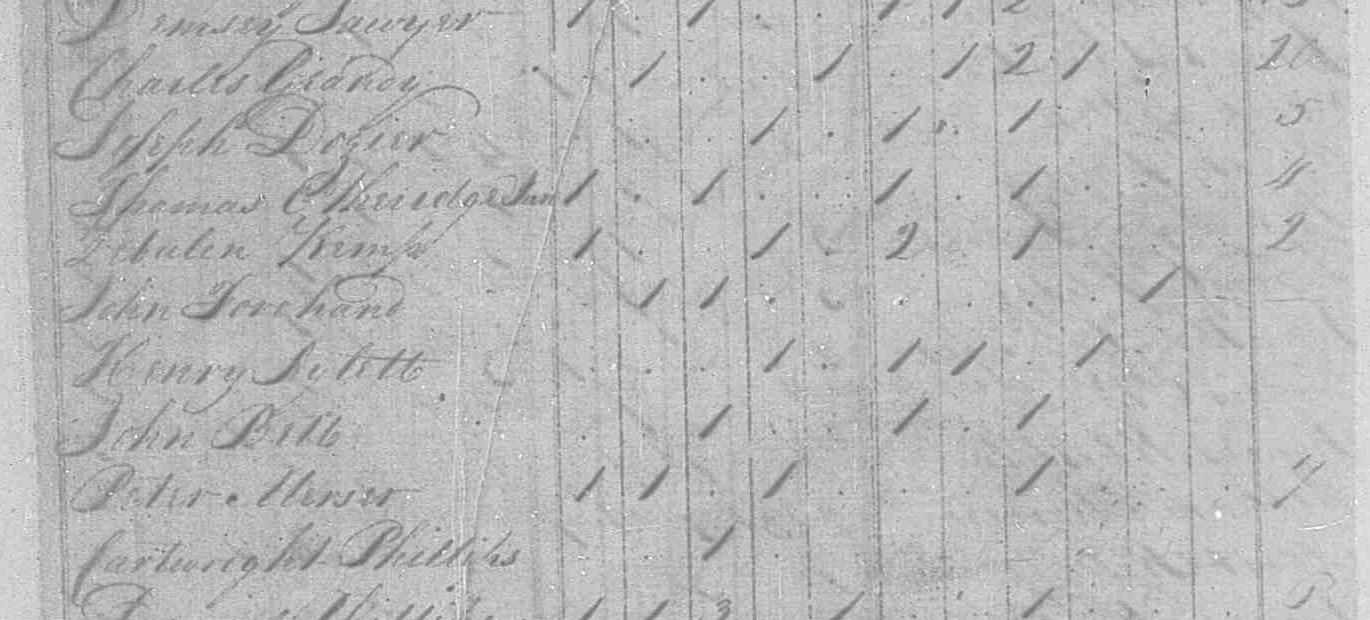
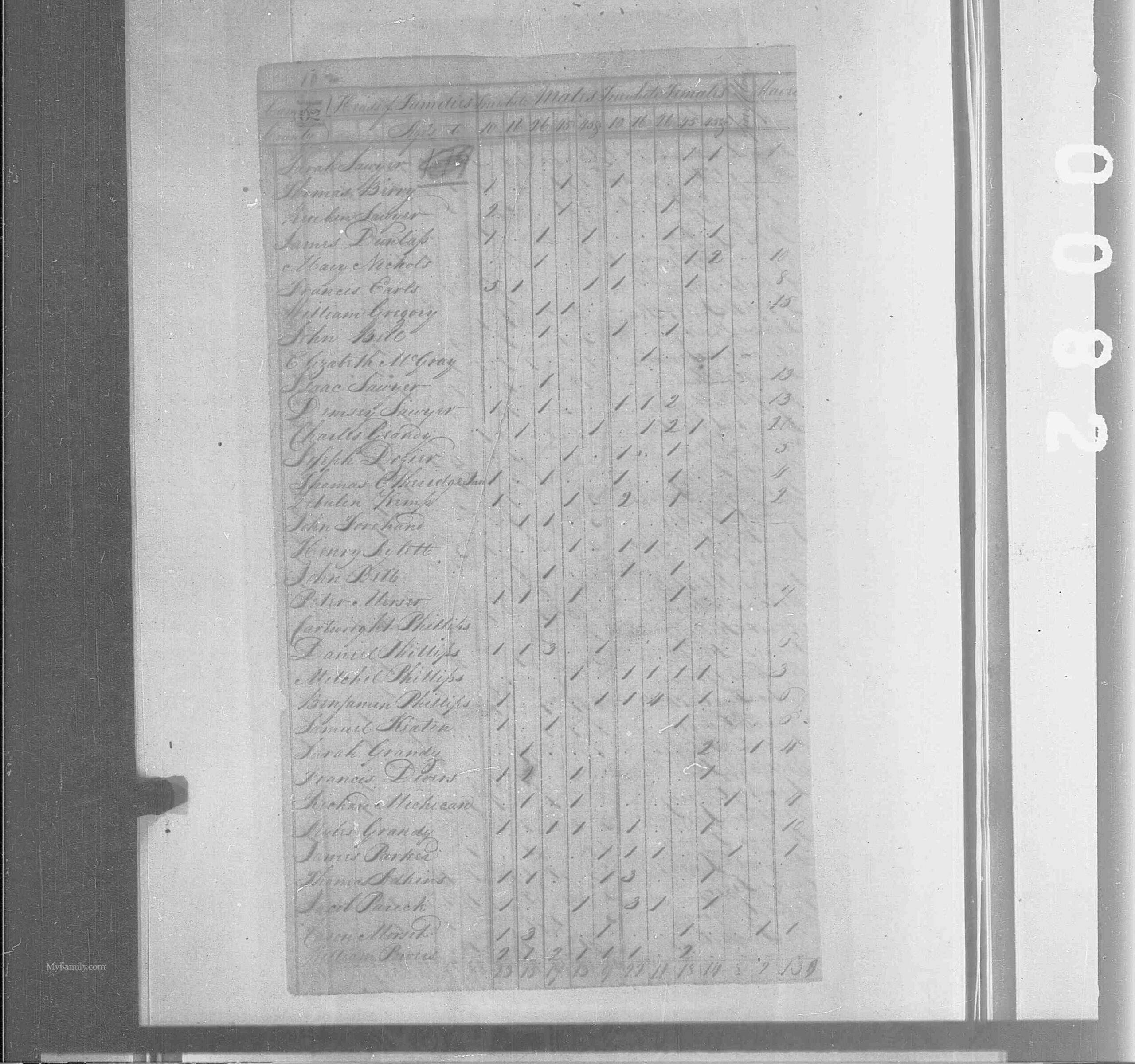
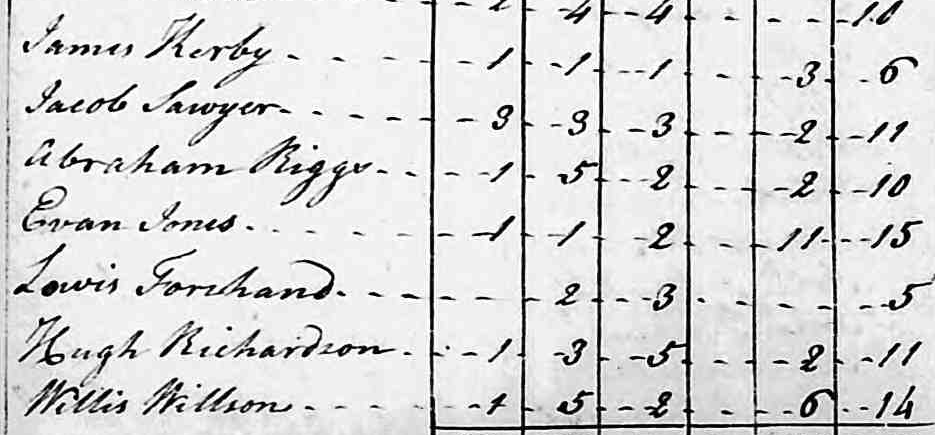
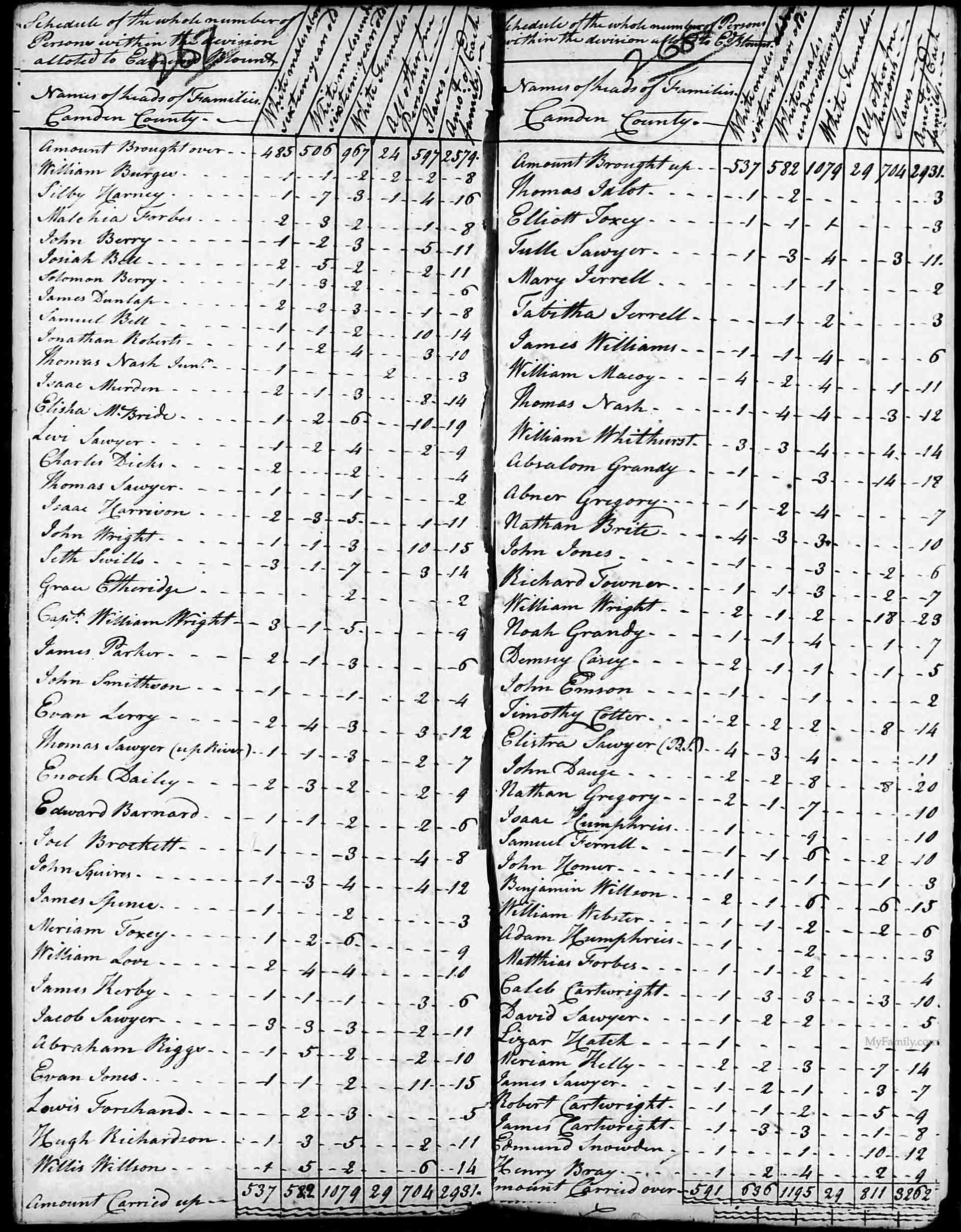
That household belonged to Lowis Forehand. In 1790, she was listed with two boys under sixteen and three females, including herself. No adult male was recorded. Immediately before her name stood Evan Jones—a useful association, because Jones had already made a particular provision for an Anthony Forehand and his wife Lois.2
On 4 February 1781, Jones leased Anthony twenty-six acres in Camden for the lives of Anthony and Lois. During the first two years, the obligation was the tax on the land; afterward, the rent included twenty-six bushels of merchantable Indian corn each year, as well as the tax. The agreement expressly protected Lois’s continued occupancy if she outlived Anthony and met its terms. Here, at least, a woman who would otherwise be difficult to find in the records appears by name, with a recognized interest in the leased land.3
The following year’s tax return gives the arrangement a little more substance. Anthony was assessed for one tract of twenty-six acres, one horse and three cattle. Evan Jones followed him on the list. The acreage agrees with the lease; the repeated association with Jones makes Lowis’s 1790 census entry a persuasive candidate for the same woman. It is this combination of land, tax and census evidence that anchors the older family in the inquiry.4
Ten years after Lowis’s household was counted, John’s household could represent part of that family grown older. Two boys under sixteen in 1790 could become the two young males enumerated in 1800. The older woman could be Lowis. Two of the earlier household’s females would then be living elsewhere or no longer alive. This is a possible reconstruction, with room for the ordinary changes a decade brings; the census does not identify any of these unnamed people as parent, child or sibling.21
By 1810, a household headed J. Forehand presents a different stage of life: a man aged twenty-six to forty-four, a woman aged sixteen to twenty-five, two boys under ten and two girls under ten. The man’s age fits the aging of the older male in John’s 1800 household. Gregory and Bell names recur in the surrounding census entries, adding a locality clue. The Bell in 1810 is styled Junior, however, and the recurring names do not prove identical neighbors or an unchanged address. Taken together, the evidence supports identifying J. with John at Moderate confidence—probable.56
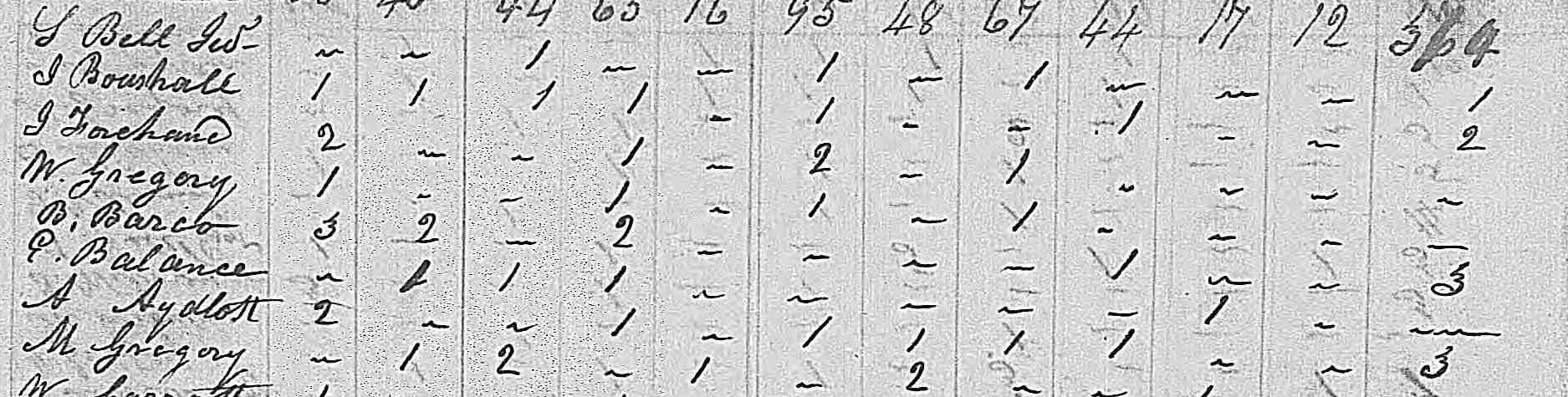
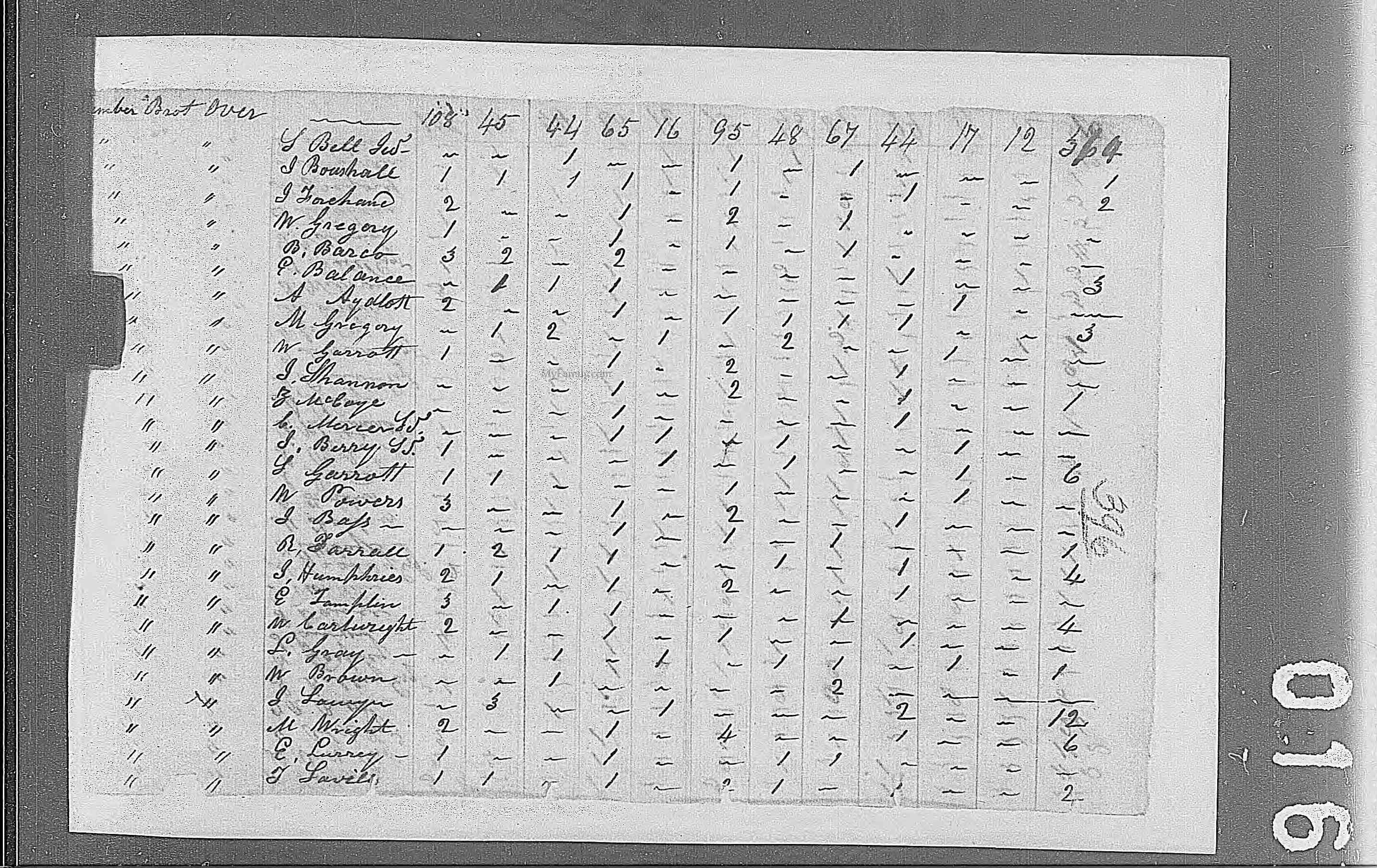
Those two boys bring the younger Anthony and William Forehand into view. Anthony’s later census age places his birth about 1804, comfortably within the younger boys’ bracket in 1810. William’s birth year is unknown. In 1830, Anthony headed a Camden household containing two men and one woman, all aged twenty to twenty-nine. William could have been the second man. William Gregory appears two rows above Anthony, recalling the Gregory name near John’s earlier entry, although identity across those years remains unproved.78
A later record names the brothers and states their relationship explicitly. On 8 February 1831, Anthony and William jointly undertook a fifty-dollar rent obligation to Demsey Gr[a]ndy for Jonneycake Town. We know the note through Anthony’s later mortgage, dated 1 August 1833. By then William was dead, and Anthony called him his brother. Their brotherhood is established; their father is not named.9
John therefore occupies a consequential place in the family’s unfinished history. Behind him stands a household that could include his mother and a younger brother. Ahead of him stand two small boys who could become the brothers renting at Jonneycake Town. The strongest reason to consider him the connection is the cumulative fit of the households, their ages and their Camden associations. Each piece belongs in the argument; none supplies the missing names by itself.
The names in these records give the family a setting even where they cannot yet give it a pedigree. John’s small household remains the point at which the older couple’s story may meet the younger brothers’. For now, the woman and the children counted beside him deserve to remain visible—and unnamed—until another record tells us who they were.
Family Ties
John’s parents remain unidentified. Anthony and Lois Forehand are possible parents, supported by the 1781–1790 association with Evan Jones and the compatible 1790 and 1800 households. The younger male and older woman living with John in 1800 have not been independently identified.
No inspected record names John’s wife. If the 1810 household was his, the younger adult woman could have been his wife, and the four children could have been their children. These relationships remain inferred from household composition.
Anthony and William are possible sons of John. Their relationship to each other is stronger: the 1833 mortgage establishes that they were brothers. It places William alive at the joint obligation of 8 February 1831 and dead by 1 August 1833. Anthony’s separate rent obligation of 5 February 1833 does not narrow that death interval.9
Between the Lines
Possibilities, not proven relationships.
The proposed bridge contains two distinct questions: whether John belonged to Anthony and Lois’s family, and whether the younger Anthony and William belonged to John’s. A discovery supporting one would not automatically settle the other.
The local surname population gives the proposal weight, but it also sets its limits. The complete inspected 1782 tax return contains two named Forehands, Anthony and Boswell. Four Camden Forehand households have been identified in 1800: Daniel, Lambert, Jordan and John. This is a limited group to compare, rather than evidence that John was the only possible father. Daniel’s probable 1810 household also contained two boys under ten; Lambert and Jordan were old enough to have children born after 1800. Their families are not completely reconstructed.46
John is the more natural continuation of the 1800 household into 1810 than Jordan. Jordan’s three boys under ten in 1800 would all have been ten or older by 1810, when J. Forehand’s household contained no males aged ten to twenty-five. A Jordan identification remains possible, but would require additional household changes or errors.6
Location is useful at the scale the records support. The Jones association connects the older family’s lease, tax entry and potential census household. Recurring Gregory and Bell names strengthen the comparison between later entries. Census order is not a surveyed boundary, however, and no recovered title or tenancy record yet places John on the twenty-six acres or connects that tract with the brothers’ rented ground.
A lease naming a successor, an estate distribution naming children, or a guardianship identifying a parent could test the proposed links. An account connecting John directly with the younger brothers would also matter. Until such evidence appears, Possible is the appropriate rating for both generations of parentage.
A Life in the Records
John’s presently identified personal appearances are few. The family anchors below are included to show how the proposed connection develops; they are not additional records naming him.
| Date | What survives | What it establishes |
|---|---|---|
| 1800 | Camden census names John Forehand; two males, aged 10–15 and 16–25, and one female aged 45 or older. | The earliest inspected record naming this Camden candidate in full.1 |
| 1810 | Camden census names J. Forehand; two boys and two girls under ten, a man 26–44 and a woman 16–25. | A probable continuation of the 1800 John; the first name remains abbreviated in the source.5 |
| 1781–1790: proposed earlier family | Lease executed 4 February 1781; Anthony’s 1782 tax entry; Lowis’s 1790 household. | Anthony and Lois’s marriage is explicit in the lease. Identification of Lowis with Lois and placement of John in her household require inference. The lease was proved in March 1792 and registered 13 April 1792; those later dates do not establish the parties’ survival.342 |
| 1830–1833: proposed sons | Anthony’s 1830 household; joint rent obligation dated 8 February 1831; Anthony’s separate obligation dated 5 February 1833; mortgage executed 1 August 1833, proved 20 August and registered 21 August. | The mortgage explicitly identifies deceased William as Anthony’s brother. The underlying rent notes have not been separately recovered.79 |
| 1850: younger Anthony’s age | Anthony reported as forty-six and born in Camden. | Supports birth about 1804; does not name his parents.8 |
If the older male in 1800 and the adult male in 1810 were John, their age brackets suggest birth approximately 1774–1784. No birth record fixes the year. His death date is unknown: an 1815 tax-list negative and failure to recognize him in the available 1820 Camden census section do not establish his death. That section also lacks stamped pages 19–20.6
The Family as We Currently Understand It
The proposed tree retains the two uncertain parentage links. Solid lines mark established relationships; dotted lines mark Possible relationships. John’s placement has a dashed outline because it remains proposed.
Lois is the wife named in 1781 and the candidate for Lowis in 1790. John’s conditional birth range depends on the probable 1800–1810 census identification. Anthony’s reported 1855 death is carried from his existing profile and remains qualified; the brotherhood and William’s death bounds come from the 1833 mortgage.109
Sources
The underlying research examined images of census manuscripts, a manuscript tax return and registered deed copies. The complete research report preserves the broader searches, corrections, competing families and independent review scopes. Bracketed source IDs below match its source register.
- [S3] United States census, 1800, Camden County, p.100, John Forehand entry. Preserved census page.
- [S2] United States census, 1790, Camden County, Lowis Forehand entry. Saved complete opening (Steven Forehand research collection). The source does not call Lowis a widow or identify the children’s relationships. Complete saved opening.
- [S1] Camden County, North Carolina, deed book E, p.158, Evin Jones to Anthony Forehand, life lease executed 4 February 1781; proved March Term 1792; registered 13 April 1792. Saved register image (Steven Forehand research collection). Names Lois as Anthony’s wife; no children named.
- [S7] Camden tax return, 1782, twenty-page manuscript file: Anthony, PDF p.10; Boswell, p.17. Complete saved return (Steven Forehand research collection); North Carolina Digital Collections archival locator. All twenty pages screened in the underlying investigation; date and decisive entries separately checked.
- [S4] United States census, 1810, Camden County, J. Forehand entry. Saved page (Steven Forehand research collection); faithful row detail (Steven Forehand research collection). The row records six free white people and no enslaved people. An earlier reading assigning two enslaved people to this household was corrected after checking the sloping row against the full page. Complete saved page.
- John Forehand research report, 17 November 2026 (Steven Forehand research collection), especially the census readings, tax coverage and competing-family analysis; second-round census comparison and actual coverage (Steven Forehand research collection). These are research syntheses, not independent sources in addition to the underlying records.
- [S5] United States census, 1830, Camden County, p.359, Anthony Forehand entry. Saved page (Steven Forehand research collection). The second man and the woman are unnamed.
- [S10] United States census, 1850, Camden County, Anthony Forehand, age forty-six, Camden birthplace. Previously checked saved image (Steven Forehand research collection).
- [S6] Camden County deed book U, p.251, Anthony Forehand mortgage, executed 1 August 1833; proof 20 August; registration 21 August. FamilySearch DGS 007513208, image 141. Complete register opening, pp.251–252 (Steven Forehand research collection); archive image. The mortgage recites the earlier rent obligations and covers personal property; it does not establish landownership.
- Existing younger-Anthony profile and its evidence context, anthony-camden-1804-evidence.json (Steven Forehand research collection). Birth about 1804; death reported 1855, retained as a qualified profile claim rather than established by this investigation.