At the old crossing of Indiantown Creek, Thomas MacKnight said he had launched a ship a hundred feet long. The sliding boards were no more than thirty feet long; the vessel traveled less than twenty-five feet before reaching water fourteen feet deep. From the keel blocks to the water, he measured a fall of little more than two feet. Years afterward, asking the British government to compensate him for what the Revolution had cost, he could still describe the arrangement in close detail.1
His business occupied both banks. Beside the bridge stood wharves and warehouses; on the north side he had built a yard equipped to construct vessels and to careen them, turning a hull so its submerged surfaces could be worked on. The bridge was within sight of his dwelling, about a quarter-mile away. In his account, a main road between Norfolk and Edenton crossed there, joining Currituck to Pasquotank. MacKnight had established himself where road traffic met navigable water.1
This was the Indiantown of the present Camden–Currituck boundary. Camden did not exist as a county during most of his career here: its territory remained part of Pasquotank until 1777. The shipyard described in his claim stood on the Currituck bank, while his commercial property reached across the river. Jesse Forbes Pugh included it in his tour of Camden in 1953, directing readers toward the high ground where it reached Indiantown Creek. Pugh was preserving a local landmark, not making a modern survey of its boundaries.2
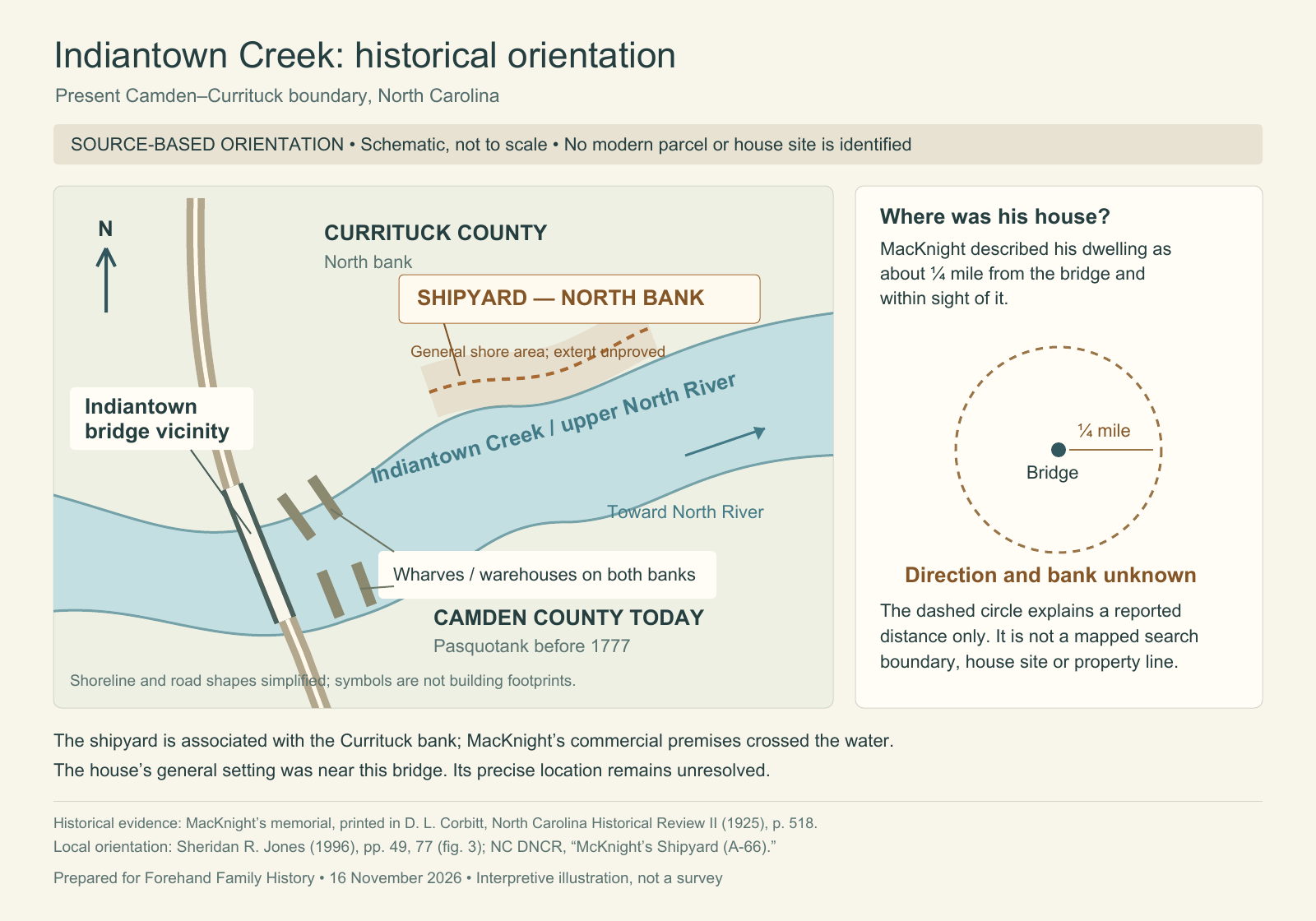
MacKnight called the yard the best in the province. Pugh repeated the tradition that it had been the largest inland shipyard in North Carolina, but introduced it as something said of the place. No comparative accounting of the colony's shipyards establishes that ranking. The particulars are impressive enough: warehouses on two banks, facilities for building and repairing ships, a timber business, and access to the waterways that carried the Albemarle's produce outward.12
A native of Scotland, MacKnight was established in northeastern North Carolina by 1757.21 His commercial world extended beyond his plantation, Belville. He had connections with the Norfolk firms of William Aitchison and James Parker, and William McCormick, as well as the business conducted under his own name. The trees of the region became shingles, staves and other cargo. Some of that cargo traveled a considerable distance before reaching the people who used it.3
The brig Johnston offers one example. In his study of the shipyard, archaeologist Sheridan R. Jones found a Port Roanoke clearance for Cadiz dated 24 May 1774: 36,000 pipe staves, 10,000 hogshead staves and 3,000 barrel staves. Those were the shaped pieces from which coopers made large casks and barrels. The same vessel cleared for Jamaica that October. These entries, reported from the port records, place the business within an Atlantic trade in useful material, far beyond the small creek from which its cargo could begin its journey.3
The business also depended on people whom MacKnight and his partners enslaved. Their abilities appear unusually clearly in testimony later offered in support of the compensation claim. Jacob Ellegood, a Norfolk merchant acquainted with the operation, described tradespeople capable of building a ship with only a master builder's assistance. The statement was meant to explain their value as property. It also preserves a different fact: much of the knowledge needed to turn timber into a working vessel belonged to the enslaved builders themselves.1
MacKnight's account placed the wharves, timber and enslaved people within a schedule of losses. Their knowledge had made the business valuable; ownership gave him control over their work and its proceeds. When the Revolution broke up the enterprise, the struggle over that property would carry some of them far from Indiantown.19
MacKnight also had a public career. He served in the colonial Assembly and held local office. A proposed bill in 1773 would place two acres of his Indiantown land in trust for St. Martin's Chapel, a burial ground and a fund for the poor. Among the proposed trustees were MacKnight, his associate William McCormick and Isaac Gregory. It was a plan for an enduring local institution, although the surviving bill made execution dependent on the king's pleasure; the proposal alone does not prove when a chapel was built.4
Two years later, MacKnight represented Currituck in the Provincial Congress at New Bern. The Continental Association sought to bring pressure on Britain by restricting trade. MacKnight argued that exporting produce was also the means of paying creditors overseas. He disputed the demand that he declare his approval of the measures, and the provincial congress censured him as hostile to American liberty.5
What, exactly, he had refused immediately became part of the controversy. On 28 April 1775, a meeting of Currituck freeholders defended him and approved the withdrawal of their deputies. The following day, the Pasquotank committee issued its own declaration in his defense. It said Joseph Jones had acknowledged hearing MacKnight offer to subscribe the Association; it distinguished that offer from signing a resolution declaring approval of it. These were local bodies taking a public position. Whatever the strength of MacKnight's enemies, they had not carried every neighbor with them.5
MacKnight answered Joseph Jones in a long letter dated 21 June, subsequently printed in the Virginia Gazette. The two men disputed the words spoken at the congress and before the Pasquotank committee. MacKnight accused Jones of using the controversy to settle a personal grievance. He also maintained that his actions were answerable to the community while his opinions remained his own. The letter is combative, at times vicious, but it identifies a real disagreement over the extent of political conformity that a representative body could demand. The later suggestion that Jones owed him for a ship has never been established; MacKnight's accusation is evidence of his quarrel, not proof of the motive behind it.6
By September, the dispute had entered a friendship. Writing from Belville to Samuel Johnston on 17 September 1775, MacKnight said Johnston's last letter had troubled him more than the attacks of his declared opponents. He asked what conduct had cost him Johnston's customary assurance of friendship. His objection to the revolutionary course now went beyond a particular export restriction: he suspected that some leaders intended complete separation from Britain and believed North Carolina was being drawn toward it step by step. He asked Johnston what an honest man in his circumstances should do.7
The letter preserves a choice as he understood it before independence had been declared. MacKnight said he could not actively support measures he thought harmful, yet doubted that he would be allowed to remain passive. In September 1775, he was still writing from his own home, appealing to an old friend's judgment and trying to defend a place for his dissent.7
By 26 December, he was aboard the Kings Fisher off Norfolk. A letter to his brother recounts two departures from Belville. He had first spent three weeks in Norfolk, returned home and then fled again after a warning that men intended to murder him. He sought protection with Lord Dunmore. When fighting came at Great Bridge, he explained, he had remained occupied with defense works around Norfolk as an engineer rather than joining the attack.8
That letter also carried news of the people left at Belville. MacKnight reported hearing that people he enslaved were hiding in the woods, including nearly thirty children and three mothers nursing infants. He was absent, and the account was what had reached him aboard the ship. The dispute that had begun over declarations and commercial obligations now reached families far beyond the congress chamber at New Bern.8
On 22 April 1776, the Provincial Congress ordered Peter Dauge and Dempsey Gregory to take possession of the people enslaved by MacKnight, James Parker and Robert Gilmore and bring them to Halifax. By 7 May, the congress described them as having been brought from Pasquotank and Currituck. It directed the managers of a furnace to be hired in Chatham County or purchased in Guilford County to put them to work for the public. The next day it approved £84 8s. 6d. for Dauge's transport expenses and handcuffs. Their labor had passed from the merchants' control to the revolutionary authorities, who now intended to employ it inland.9
One girl appears separately in these proceedings. Her name was Nan. John Pendleton told the congress that MacKnight owned only a half interest in her and that the other half belonged to him. On 10 May, the congress allowed Pendleton to take her into his possession, provided he gave a £140 bond and later proved his claim. The provision made him answerable for her value and yearly hire. The order records a contest between men over ownership; Nan's own wishes do not appear in it.9
Other names survive in the State Archives' guide to the confiscation accounts. Africa, Alice and Jacob are indexed under MacKnight for April 1776. The list records individuals whom the broader proceedings grouped under an owner's name. The guide points to an original account that has not yet been examined here; their occupations, relationships and subsequent lives remain to be recovered from that fuller record and others.10
By November 1777, the Assembly described MacKnight's enslaved people as employed at John Wilcox's ironworks in Chatham County. Their hire appeared again in the government's settlement with Wilcox the following April. These proceedings follow their coerced work beyond the removal order, although they do not identify the workers individually.19
MacKnight's own course led back to Britain. In a letter dated 7 November 1776, he described going to Cape Fear early that February, accompanying the British expedition to Charleston, returning to Cape Fear in July and then going home to Britain.21
He sought compensation for his American losses. His printed case survives in an institutional collection, and an edition of his memorial preserves the unusually detailed description of the shipyard. In 1782 he also petitioned about a planned return to America the previous year, saying the government had changed its plans and left him with an unpaid allowance. That was a canceled journey, not evidence that he had returned to Indiantown. The enterprise that appears in his claim as a schedule of land, buildings, ships, merchandise and enslaved people had been a livelihood for its owner and a place of forced labor for others.1921
Scotland supplied a new setting for him. A memoir furnished by his brother James's family identifies Thomas MacKnight of Ratho as the younger brother who had supported the Crown during the American war and afterward returned home, turning his attention to agricultural improvement. An archival description supplies the more exact geographical bridge: Thomas MacKnight, formerly of Currituck, now of Ratho.11
Work on a house at Ratho provides a closer view of that new life. In a court pleading later transcribed by historian Sebastian Pryke, cabinetmaker John Fisher described his contract with MacKnight, dated 11 July 1786, to finish the house's timberwork. Pryke's summary of Fisher's wage accounts records twenty-two men paid there in 1787–1788. The house required a substantial amount of skilled work, and the accounts preserve something of the undertaking from the contractor's side.20
Later correspondence is cataloged from Ratho House and Cartsburn in 1805–1806. A family memorial records MacKnight's death in April 1811, in his seventy-third year. His story continued for decades after he lost the Indiantown enterprise.11
The waterfront continued to have a history after MacKnight's departure. A state inspection act of 1784 named Indian Town bridge among Currituck's inspection places.18 A sawmill advertisement published on 29 November 1787, quoted by Jones, sought someone capable of tending a mill for Thomas Pool Williams. Later references connect the place with a store and post office. Those uses help explain why an object found beside the old yard cannot automatically be assigned to the years of MacKnight's ownership. The creek received the residue of more than one generation's work.12
The surviving hull brought that problem into sharp focus. Archaeologists investigating the suspected shipyard found vessel remains in the early 1990s; the contemporary account places their discovery in the 1993 season. A field investigation followed in the spring of 1994. The wreck lay downstream of the bridge, tipped onto its starboard side, its bow against the Currituck bank and its stern angled upstream. It was much smaller than the hundred-foot ship in MacKnight's claim: the measured remains extended 44 feet 4 inches from the aft side of the stem to the aft side of the sternpost, with an extant beam of 13 feet 10 inches.13
Poor visibility made the work difficult. Jones recorded that useful underwater photography and video were not possible. The investigators established a baseline, measured the surviving structure, examined selected portions of the hull and recovered wood samples and artifacts. Instead of a clear underwater view, the record had to be built through measurements, drawings and the close examination of material brought up for study.13
The construction supplied clues. White oak and red cedar, fastenings and the arrangement of timbers could be compared with known building practices. Three mast steps—the places where a mast's heel was seated—suggested that the vessel might have begun as a sloop and later been altered to carry a schooner's rig. But Jones left the sequence open to further examination. In 1996 he specifically recommended investigating whether one or more of the steps had been cut after the original construction.14
Small objects mattered, too. A piece of dark yellow creamware found beneath a limberboard was especially useful because its sheltered position made later intrusion less likely. Other objects came from a much less secure context. Modern shell casings, for example, showed how material from later activity could enter the site. An average artifact date could assist an interpretation; it could not name the day a vessel was abandoned.14
Jones's eventual reconstruction favored a vessel built in the third quarter of the eighteenth century, perhaps around 1775, subsequently altered and abandoned in the 1790s. He considered the possibility that it had served MacKnight, lain idle after his departure and been returned to service by a later owner. That was a proposed history assembled from structure, artifacts and the known use of the waterfront. Some construction details could point later, and the mast-step question remained unresolved. The thesis's most important qualification was also its plainest: documentary research had not identified the vessel's name or owner.14
This is why the wreck should not be called the Belville, the Mackey, or any other named vessel simply because MacKnight or his partners owned it. Nor does a later story of abandonment during the embargo of 1807 settle the matter. Jones considered that explanation and judged it a poorer fit with the archaeological evidence than abandonment in the 1790s. The wreck belongs to the history of the Indiantown waterfront; its particular connection to MacKnight remains a question.14
The objects have continued to carry that history beyond the creek. In 2026 the Museum of the Albemarle described artifacts from the MacKnight shipyard site on loan from the state's Underwater Archaeology Branch: a pipe-bowl fragment, coral, a wooden paddle, button backs, tacks and pins. These are modest survivals of a place once connected to distant markets and contested political loyalties.15
The hundred-foot ship survives in MacKnight's description. The smaller hull survives as an archaeological record, with its owner still unnamed. Between them lies a working waterfront: the bridge, the warehouses, the timber, and the skilled people whose labor made vessels ready for the river. MacKnight carried his account of the place to Britain. Nan's custody order and the account for removing enslaved people record another part of its ending, on the American side of the ocean.
Along the Creek
Six photographs supplied by Steven Forehand bring the account back to the creek bank. He identifies two long timbers as cypress logs used to move vessels into the water, and the stones along the shore as ships' ballast. Other views show heavy worked timbers at the water's edge near the bridge, including a timber with a circular hole. He suggests a connection with the shipyard or with later lumber and shingle production.22
The waterfront had more than one working life. Jones quotes a November 1787 advertisement seeking someone to tend Thomas Pool Williams's sawmill. Jones's site plan draws a U-shaped shoreline feature with the wreck immediately outside its opening. Wilde-Ramsing's later account describes apparent shoreline bulkheads forming a small basin, perhaps an old launching slip, and places the wreck partly across its entrance. These are the archaeological comparisons for the timbers in Forehand's photograph; the drawing does not identify individual logs. The stones' identification as ballast rests here on Forehand's account; their origin and date of deposition remain undetermined.1222
Photographs from the creek
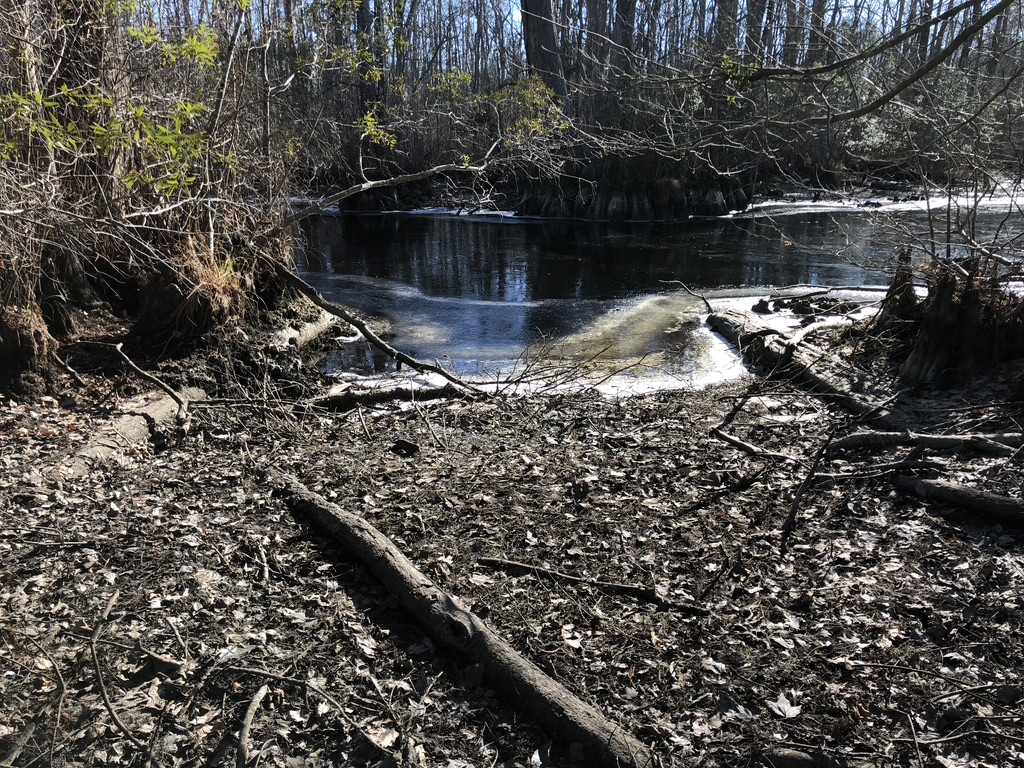
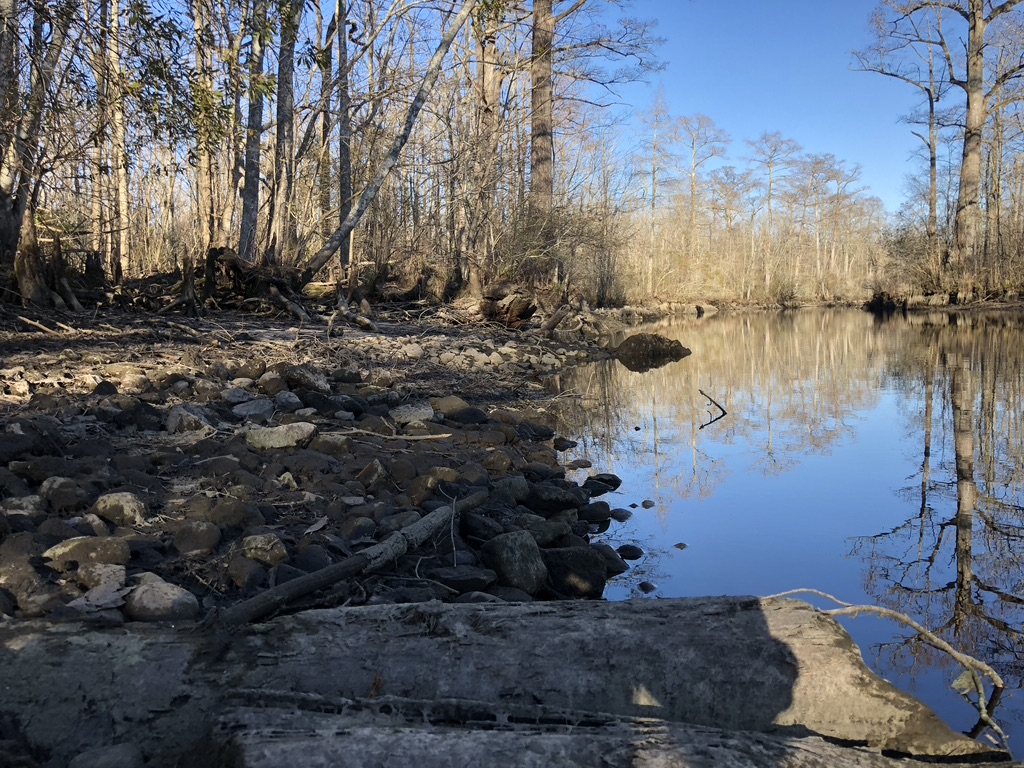
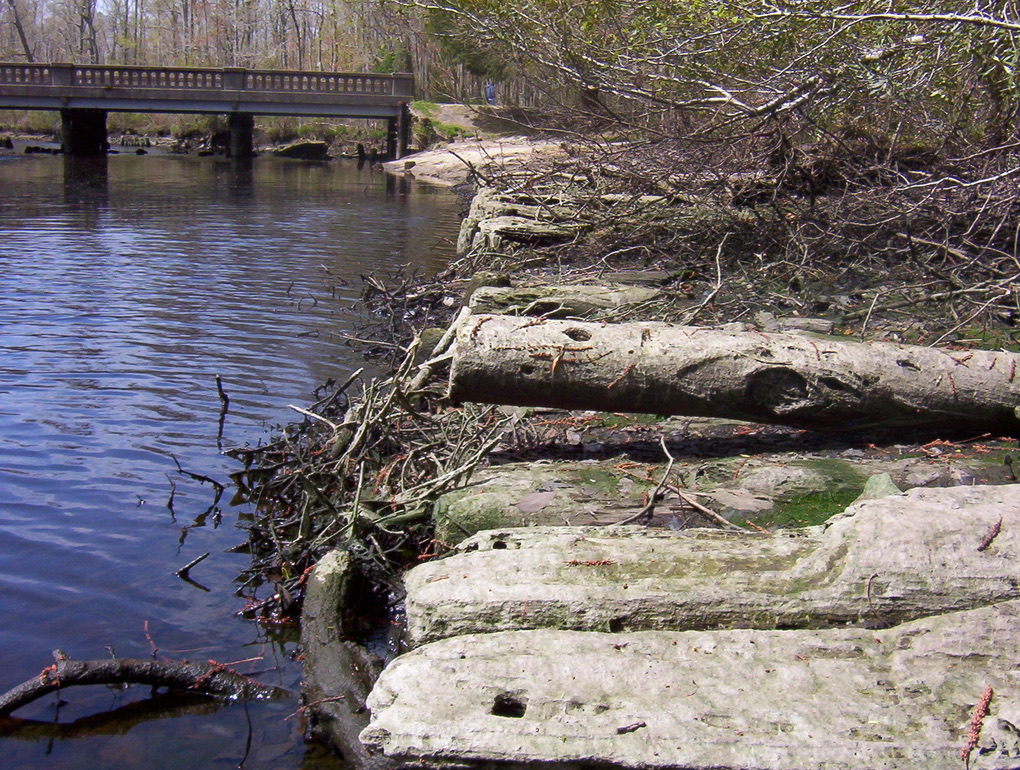
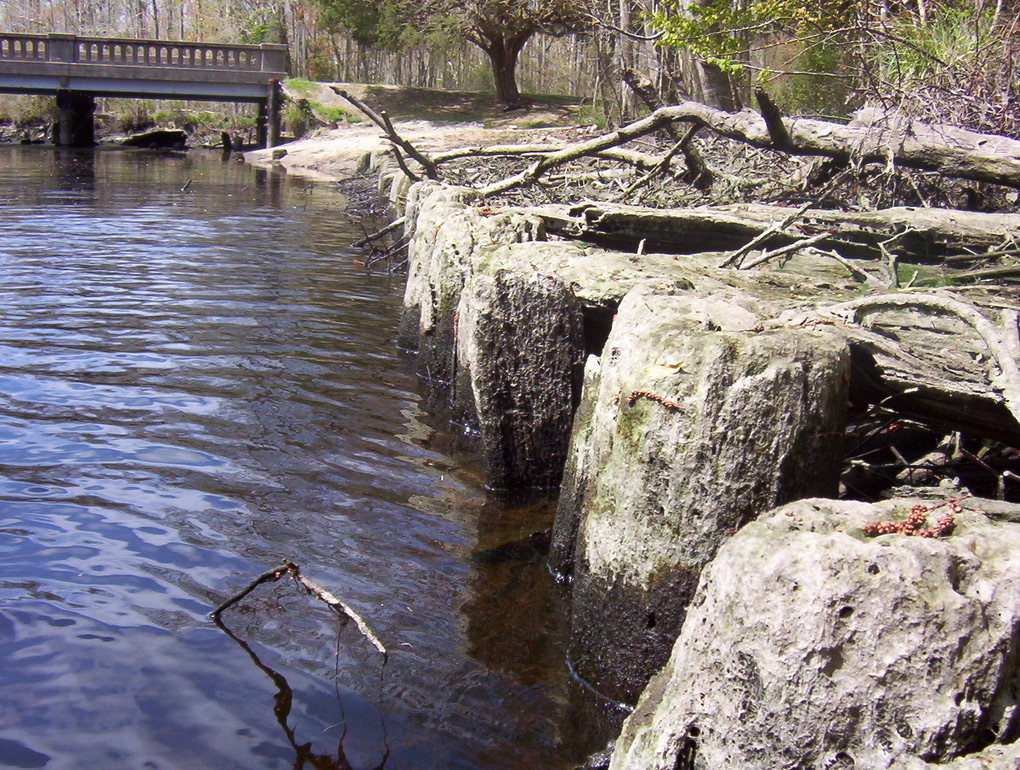
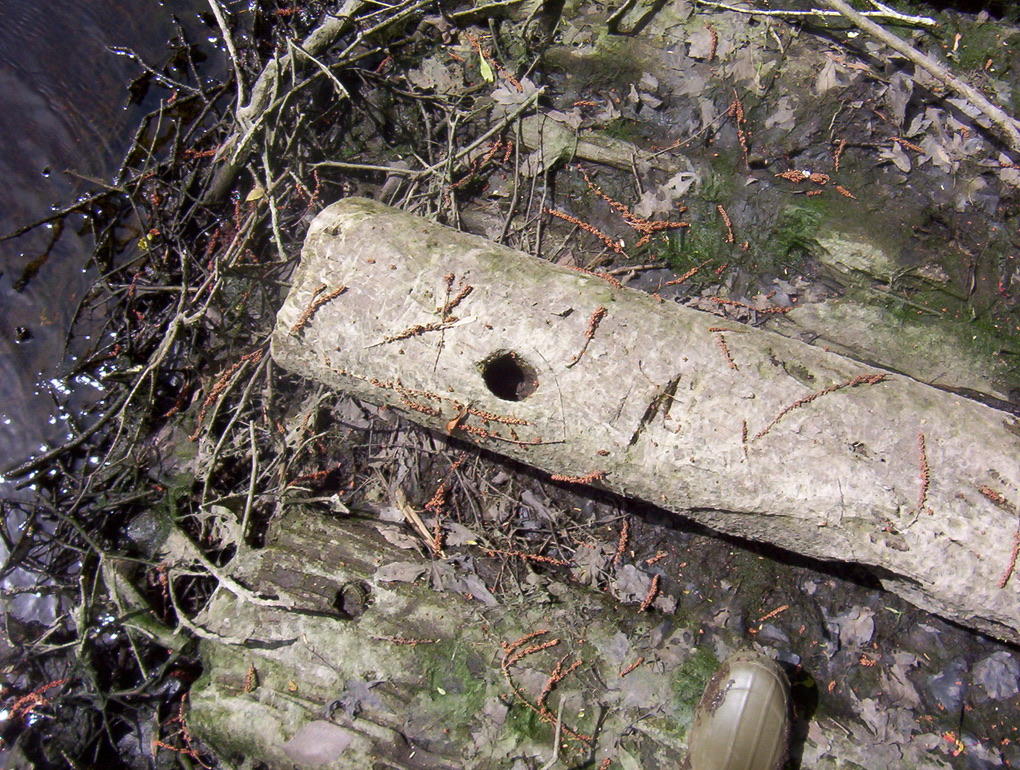
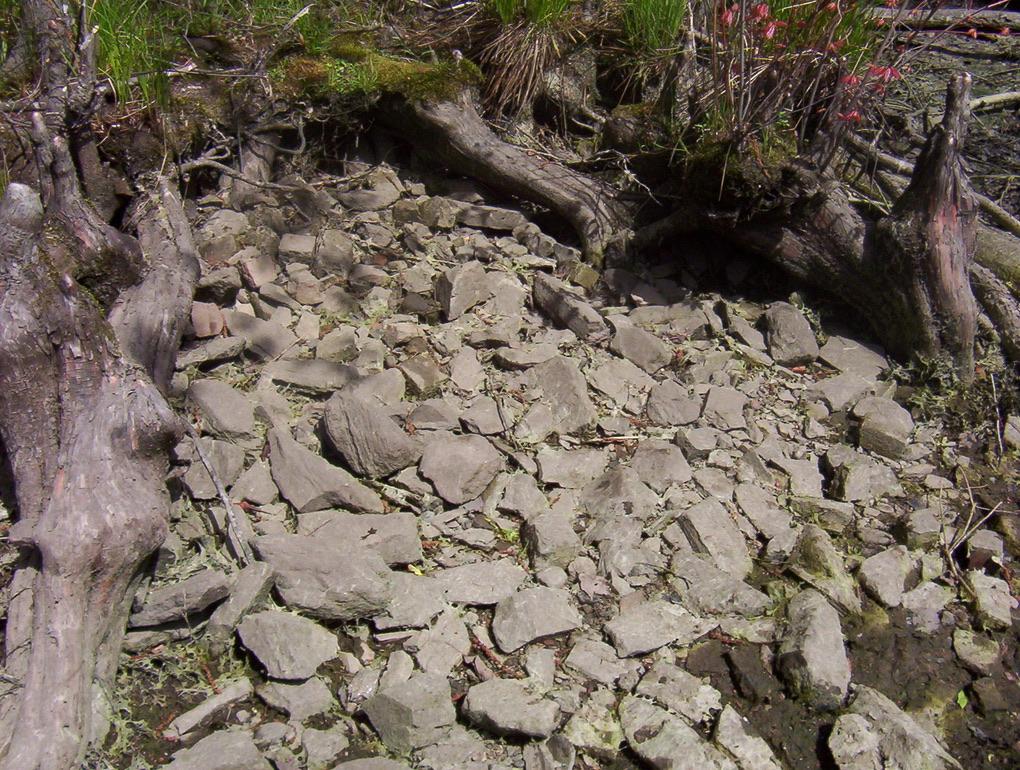
Photographs supplied by Steven Forehand. Dates taken and photographer remain unconfirmed. The timbers have not been independently dated or matched to a surveyed feature.
Family Ties
The strongest family source recovered is the early nineteenth-century memoir of the Reverend James Macknight (17 September 1721–13 January 1800), based on particulars supplied by his family. It identifies his parents as William Macknight, a minister at Irvine, and Elizabeth Gemmil, and identifies Thomas of Ratho as their youngest surviving son. Read with the record describing the former Currituck merchant at Ratho, it supports the identification of these parents and of James as Thomas's brother at High confidence (very likely). William's and Elizabeth's birth and death dates remain unknown in the checked evidence.11
The family memorial names Christian Crawfurd of Cartsburn as Thomas's wife and gives her death as 12 April 1818. It also names their daughters Margaret and Robertina, who died in infancy; their youngest son Thomas, who died in January in his seventh year; and their eldest son William Crawfurd, whose death is recorded in November 1855. The damaged lettering has not yielded every exact date. A separate tablet identifies Elizabeth Macknight as Thomas's second daughter and records her birth on 24 December 1781 and death at Edinburgh on 15 March 1864. These relationships are stated by the memorials, which are retrospective family records; the cross-record identification with the Indiantown merchant is High confidence.11
A later church compilation identifies another daughter, Christian Crawfurd, as the eldest daughter of Thomas Macknight of Ratho and dates her marriage to the Reverend Thomas Macknight, James's son, to 18 April 1808. That younger minister is a different man from the shipyard owner, and this daughter must not be confused with her mother. The printed entry has now been checked against its page image; it remains a published-compilation finding, with the original marriage record unexamined. The evidence supports a developing family account, not a complete tree.11
A Life in the Records
This is the dated evidence identified in the present investigation, not a complete inventory of every surviving record. Dates of letters, transactions, registration and later references are kept distinct. A reference to MacKnight's former property does not establish that he was present or still living locally.
Contemporary letters and proceedings read in published editions
| Date | Record and its significance |
|---|---|
| 1773 | Proposed bill for two acres at Indiantown, St. Martin's Chapel, burial ground and poor fund. The bill's language includes a suspending clause; it is not by itself evidence that construction was completed.4 |
| 6 April 1775 | Date of the censure as recalled in MacKnight's 21 June public reply. The original congressional entry remains a separate source to compare.6 |
| 19 April 1775 | Pasquotank committee meeting at which, according to its subsequent declaration, Joseph Jones acknowledged hearing MacKnight offer to subscribe the Association. This is reported speech in the committee's account.5 |
| 28 April 1775 | Currituck freeholders' meeting defended MacKnight and approved withdrawal of their deputies; its report was printed 11 May.5 |
| 29 April 1775 | Pasquotank committee declaration distinguished signing the Association from endorsing the approval resolution; printed 11 May.5 |
| 11 May 1775 | Publication of the two local defenses in the Virginia Gazette, or, Norfolk Intelligencer, p. 3, columns 1–2.5 |
| 15 May; 15 June 1775 | Date and reported newspaper publication of Joseph Jones's criticism, identified in MacKnight's subsequent response. These are dates reported by the respondent, not newly inspected copies of Jones's original letter.6 |
| 21 June; 5 July 1775 | MacKnight dated his public rebuttal at Belville on 21 June; the published Colonial Records identifies its printing in the Virginia Gazette on 5 July.6 |
| 17 September 1775 | Letter from Belville to Samuel Johnston about independence, political pressure and their friendship.7 |
| 26 December 1775 | Letter aboard the Kings Fisher off Norfolk to his brother, the Reverend Dr. Macknight; accounts of flight, Norfolk defenses and reports from Belville. It proves the writer was still in the Norfolk area at this date, not already settled in Britain.8 |
| 22 April; 6–8 May; 10 May 1776 | Congress ordered the removal of people enslaved by MacKnight and two associates to Halifax (22 April); ordered management and rental of plantations (6 May); assigned the removed people's labor to an inland furnace (7 May); approved transport and handcuff expenses (8 May); and made a separate custody order concerning Nan (10 May). These are property proceedings, not MacKnight's personal appearances.9 |
| 7 November 1776 | MacKnight's letter recounts his movement from Norfolk to Cape Fear early in February, the Charleston expedition, and a return to Cape Fear in July before going to Britain. It supplies a retrospective sequence, not the date of his Atlantic crossing. The printed date corrects an earlier reported 6 November.21 |
| 14 February 1777 | A letter from Cross Creek reports that the state ironworks commissioners had also taken possession of MacKnight's enslaved people. It does not supply a separate count for his group or identify individual workers.19 |
| 4 June 1777 | Dated petition seeking relief, printed in the documentary edition. It retrospectively reports the Belville's clearance from Port Roanoke on 24 October 1775, capture at Ocracoke in December 1775, and capture off Cape St. Vincent on 17 May 1776 before being taken to Gibraltar. These are his reported shipping events, not proof that he was aboard or identification of the archaeological hull. The petition's date does not belong to the separate, undated claim memorial that follows it.21 |
| 25, 28–29 November 1777 | The Commons described MacKnight's enslaved people as hired at John Wilcox's Chatham ironworks on public account (25 November); Senate concurrence followed on 28 November and was received by the Commons on 29 November. A separate resolution concerned an unnamed man at large in Pasquotank. It does not name Jacob or identify him as an escapee from the works.19 |
| 23; 27 April 1778 | Commons report and Senate proceedings concerning the settlement with Wilcox included the hire of MacKnight's enslaved people. This is evidence of the government's accounting for their labor, not wages paid to them or proof of any individual's later whereabouts.19 |
| 12; 18 June 1782 | A shipbrokers' certificate describes MacKnight as then in London (12 June); a separate affidavit recalls the sale of Belville cargo at Cadiz in August 1776, while acknowledging that the witness lacked his books and exact amount (18 June). These are supporting statements in his claims papers, not new North Carolina appearances.21 |
| 31 July 1782; retrospective reference to 3 July 1781 | Petition reports £250 promised on 3 July 1781 conditional on returning to North Carolina and says changed government plans had prevented departure and left payment outstanding. The petition is his statement of the matter, not proof of an actual 1781 return.21 |
| October 1782, two petitions | Two printed petitions seek government relief; no day is supplied. Keep these separate from the undated shipyard memorial.21 |
| 26; 28 November 1782 | MacKnight's letter and the Treasury reply discuss financial assistance. The reply recalls £500 paid in 1777 but does not recall it as compensation or an advance against compensation; it does not establish a final award for his claimed losses.21 |
An undated claim memorial
MacKnight's memorial and schedule, printed by Corbitt on pp. 513–521, describe his property and the shipyard. The edition supplies no date for this document. It must not inherit the 4 June 1777 date of the separate petition immediately before it. The claimed values are his account of loss, not a government valuation or compensation award.121
Other contemporary records identified through abstracts or later historical accounts
These entries retain their source status. They have not all been checked against original manuscript images.
| Date | Reported record or lead |
|---|---|
| 1750 or 1755; 1757 | Later sources differ on the Scotland-to-Virginia arrival year. MacKnight's undated memorial states that he settled as a merchant in 1757; it separately dates his business connection with his Norfolk associates to 1755. A business connection does not establish the year of physical arrival. Neither reported arrival date is adopted as exact here.321 |
| 1 July 1761; first Tuesday in January 1762 | A Currituck Letter Book 1 abstract, pp. 10–11, names Thos. Macknight as witness to an appointment of an attorney. The first date belongs to the instrument; the second to its later court proof. The original has not been inspected.17 |
| April 1762; 1770–1771; 1773–1775 | Assembly or election references in the standard biography and local histories. Pugh lists April 1762 service and says the 1773 Pasquotank election was ruled illegal; Jones's 1770/1774 wording differs from other rosters. A complete original session-by-session roster remains to be reconciled.1617 |
| 25 March; 4 April; 29–30 September 1763 | Two Currituck Letter Book 1 abstracts, pp. 51–54, concern separate 400-acre purchases: one executed 25 March and registered 30 September; the other executed 4 April and registered 29 September. These are abstract-supported acquisition dates, not a surveyed shipyard boundary.17 |
| 1764–1765; 27 February 1765 | Land transactions near Indian Ridge and North River Bridge, reported in Carolina Trees & Branches III (1994), p. 7. They are acquisition leads, not a modern yard boundary.17 |
| 2 February 1765 | A modern research table reports a 454-acre conveyance to Thomas McKnight, Pasquotank Deed Book D&E, pp. 388–389. The table images were read; the original deed was not.17 |
| 18 April 1768; 13 October 1791 | Currituck Deed Book 6, p.172: reported sale by MacKnight to Frankey Nichols of Bridget, her children Vina and George, and an unnamed man. The first date is execution, the second registration. The abstract does not identify their occupations or place them at the shipyard.17 |
| 11 May; 23 July; 1 November 1768 | Francis Brown judgment and sheriff's sales reported in Currituck and Perquimans deed abstracts. Separate tracts must not be combined as the Indiantown yard.17 |
| 19 January; 6 March 1769 | Perquimans abstracts report MacKnight's conveyances of 100-acre Balahack parcels. They concern a different locality.17 |
| 1 February 1769 | A modern research table reports a five-acre conveyance by McKnight, Pasquotank D&E, pp. 486–487. Its 10 June 1766 antecedent-title recital is not itself a MacKnight appearance. Five acres is the checked table reading; the original deed remains uninspected.17 |
| 17 June 1769 | An abstract in the Anthony Markham estate names William Boyd, Thomas Boyd and Thomas McKnight on a guardianship bond. Identification of this McKnight with the merchant is not established from the abstract alone; no kinship with the wards is proved.17 |
| 4 June 1770 | Registration of the brig Johnston at Port Roanoke, reported by Jones from port records.3 |
| 28 August 1770 | Justice-of-the-peace appointment reported by Jones; exact citation and date require original comparison.3 |
| 31 October 1772 | MacKnight's £600 lumber bond for a Cadiz voyage, reported by Jones.3 |
| 24 May; 13 July; 30 October 1774 | Johnston clearance to Cadiz; registration of the sloop Mackey with MacKnight among its owners; Johnston clearance to Jamaica. None identifies the archaeological hull.3 |
| August 1774 | Jones reports a £700 bond for the vessel Ann by an associate. This is a business-context entry, not a proved personal execution by MacKnight.3 |
| 6 May; 5 June 1775 | Publication dates reported respectively in Pugh and Jones. The independently checked newspaper defense appeared 11 May; MacKnight's own response identifies the criticism as dated 15 May and published 15 June. These differing secondary dates are retained as discrepancies, not additional proved events.5617 |
| October 1775 | Later accounts give this month for flight from North Carolina. The 26 December letter supplies a more complicated Norfolk–Belville–Norfolk sequence; October is not adopted as the date of final departure for England.816 |
| December 1775 | Pugh quotes a court appointment of a replacement clerk after MacKnight and his deputy were absent. The court entry is a separate original-record target; it does not record MacKnight attending court.17 |
| February; July–August; later 1776, secondary chronology | The standard biography places MacKnight with Governor Martin and in the Cape Fear region before departure for Britain. The newly read 7 November 1776 letter gives his own retrospective route; it dates the return to Cape Fear to July but leaves the subsequent crossing undated.1621 |
| 6 July 1776 | A later historian cites a governor's letter about MacKnight dated 6 July; that particular letter remains an uninspected lead. The separate MacKnight letter formerly reported as 6 November has now been read in the printed edition, where it is dated 7 November.921 |
| 20 April 1777 | Perquimans deed abstract records a sheriff's sale of 600 acres formerly MacKnight's. It is a property proceeding, not a personal appearance.17 |
| 1777, reported | A later account describes an ironworker named Jacob associated with McKnight escaping an inland ironworks. The printed State Records pages it cites do not contain that account. The event and identity therefore remain an unverified lead.10 |
| 20 October 1778; 8 January 1779 | Later Perquimans land/mill references. They do not establish MacKnight's continued local residence or identify the Indiantown mill.17 |
| September 1779, reported | A later history cited in a modern assessment reports his marriage to Christian Crawfurd in this month. The wife is independently named on the family memorial, but the marriage date has not been verified from an original parish entry.11 |
| 1780–1786 | An official District Superior Courts finding aid catalogs an Edenton estate file under Aitcheson and Thomas MacKnight, SR.398.1, box 75. These are the catalog's file dates; the uninspected packet does not establish either man's death or attendance.17 |
| 24 July 1781 | Editorial material associated with Janet Schaw's journal reports his approach to Samuel Martin with letters from Martin's brother, Governor Josiah Martin. The brothers in that phrase are the Martins.17 |
| 1782 | Pasquotank estate index entry, “Macknight, Thomas 1782.” A packet locator, not a death record. The underlying papers and identity remain to be examined.17 |
| 1781?; 1782; 14 June 1784 | A surviving printed claim is cataloged as possibly 1781; Jones cites claim material dated 1782; a later historian identifies testimony on 14 June 1784. The undated memorial and several separately dated petitions have now been read in Corbitt's published edition. The original claim file and June 1784 testimony remain uninspected; these dates must not be assigned indiscriminately to the whole packet. A claim is not proof of an award.1921 |
| 18 October; 17 November; 27 November 1782 | Currituck deed abstracts report several separate former-MacKnight sales. Registrations are 30 December 1782, 22 May, 26 May and 19 August 1783, and 13 October 1785. Two abstracts also recite vendues of 8 and 28 October 1782; the latter follows its stated execution date and needs original comparison. These do not establish one transfer of the complete yard.17 |
| 1786; 29 March 1794; 1794 or 1795 | A modern Edinburgh landscape survey reports a Ratho purchase in 1786; this is not an inspected deed. A Scottish archival catalog describes a 29 March 1794 legal proceeding by Thomas Macknight of Ratho. A Parker-papers finding aid dates to 1794 or 1795 a document describing him as formerly of Currituck and now of Ratho.11 |
| 11 July 1786; 1787–1788 | Fisher's court answers report a contract with Thomas McKnight of Ratho to finish the house's timberwork on 11 July 1786; a summary of his accounts records wages for twenty-two men in 1787–1788. These are archival transcriptions and summaries published in 1995, not newly inspected original papers.20 |
| 19 March 1787 | Last testimony noted in the standard North Carolina biography, given in another Loyalist's case. This is that biography's documentary limit, not a death date.16 |
| 29 November 1787 | Williams sawmill advertisement quoted by Jones. It records the advertised need for a mill tender, not the date or extent of an acquisition.12 |
| 1 September 1788; 1 January 1798 | Execution and registration of a later 200-acre Indian Ridge conveyance, Currituck DB8, p. 44, with a chain through former MacKnight land. The ten-year separation is recordkeeping, not evidence of a later MacKnight transaction.17 |
| 1789 | Jones's introductory and concluding shorthand gives this year for Williams's acquisition. It is not reconciled by the 1787 advertisement or a proved purchase deed.12 |
| 14 May; 29 July 1791 | A later deed abstract records Thomas Pool Williams's two-acre seminary/worship conveyance and registration, referring to an earlier MacKnight chapel gift. The original deed and statutory sequence need further comparison.17 |
| 15 March; 14 July 1796 | John Humphries's division and its registration reference land bought at a MacKnight sale, beginning at Indiantown Bridge. The deed is a later title reference, not evidence MacKnight attended.17 |
| 25 November; 29 December 1797; 8 August 1803; 17 April 1810 | Later deeds trace portions of former MacKnight land through Thomas Williams Senior. The precise connection to Thomas Pool Williams's waterfront holdings remains to be proved.17 |
| 1801; 1808; 12 November 1823; 15 May 1824 | Jones gives inconsistent 1801/1808 dates for a Marchant acquisition. A distinct deed abstract records Gideon C. Marchant's acquisition on 12 November 1823, registered 15 May 1824. That tract has not been connected to the yard by a complete title chain; the early owner and later doctor are not silently merged.1217 |
| 4 May 1805–9 December 1806; 25 April 1806 | The British Library catalogs correspondence from Thomas Macknight at Ratho House and Cartsburn, and a letter addressed to him on 25 April 1806. These are cataloged letter dates; their manuscripts were not inspected.11 |
| 18 April 1808; 1810 | A later church compilation dates the marriage of his daughter to 18 April 1808; this is a family-event reference, not proof of his attendance. A Parker-papers finding aid lists printed legal answers in 1810; their contents require direct examination.11 |
| April 1811; 19 April 1811 reported | A directly inspected memorial photograph records death in April 1811, in his seventy-third year. This supports an approximate birth range of 1738–1739, not an exact birth date. The precise death day is damaged; 19 April is reported elsewhere without a precise original locator and is not adopted.11 |
| 1814, with later amendments including 1829 | A Scottish land-tax transcription distinguishes former owner Thomas Macknight from a later proprietor. It is a later property record, not evidence that Thomas remained alive.11 |
The place in later records and archaeology
| Date | Evidence concerning the place |
|---|---|
| 1784 | An enacted inspection statute names Indian Town bridge among multiple Currituck inspection places. It does not establish the station's first designation or an exclusive privilege for MacKnight.18 |
| 1953 | Pugh's Journeys places the remembered yard at high ground along Indiantown Creek.2 |
| 1957 | Pugh's Three Hundred Years Along the Pasquotank incorporates MacKnight into the political history of the region. It is a later history drawing on earlier records.17 |
| 1992–1993 | Conflicting discovery wording in the field literature; the 1995 report supports survey/discovery in the season before the 1994 investigation.13 |
| 30 April–6 May 1994 | Field investigation reported in the thesis; the contemporary newsletter describes May 1994 work.13 |
| 1995; 1996 | Preliminary newsletter report followed by the thesis and its preferred but qualified vessel chronology.1314 |
| 4 August 2026 | Museum of the Albemarle's published account describes artifacts from the site on loan from the Underwater Archaeology Branch.15 |
Between the Lines
Open questions and possibilities, not established connections.
The wreck could have been built at MacKnight's yard, but location and compatible materials do not identify its builder. Its later-looking construction details and unresolved mast-step sequence leave room for a different vessel history. Further examination of those joints and a vessel record with matching measurements could test the connection; attaching a familiar ship name would not.
The later owners present a land problem as much as a biographical one. A sawmill advertisement, a chapel plot, a store account and an adjoining tract can all concern Indiantown without describing the same property. The deeds must be followed through their bounds before the yard, dwelling, mill and later businesses can be placed on a modern parcel. The conflicting Marchant acquisition dates make that comparison especially necessary.
The local estate index's “Macknight, Thomas 1782” is another open question. MacKnight appears in later evidence, so an index date alone cannot be his death date. The packet might concern an absentee's property, a namesake or later administration; inspecting it can distinguish those possibilities. It belongs in the research record, but it should not end his life prematurely.
The indexed Jacob may be the ironworker described in a later article, but this remains only a possibility. The article's cited State Records pages were obtained and checked; they concern other matters. Until the correct underlying document is located, neither the reported escape nor the identification with the April 1776 Jacob should be treated as established.10
Sources and reading notes
- Sheridan R. Jones, The Historical and Archaeological Investigation of the MacKnight Shipyard Wreck (0001NCR), M.A. thesis, East Carolina University, Summer 1996, printed pp. 16–18, quoting Loyalist Claims Papers, Public Record Office, Audit Office 13, bundle 121. The photographed thesis pages were checked. MacKnight's yard description is now also read directly in D. L. Corbitt's published claim edition, North Carolina Historical Review II (October 1925), p. 518; see note 21. The original compensation-claim manuscript remains uninspected, and Jacob Ellegood's testimony is still transmitted here through Jones's quotation. These source layers are not independent witnesses to the same measurements. Complete thesis catalog record.
- Jesse Forbes Pugh, Journeys Through Camden County (1953), p. 10; N.C. Department of Natural and Cultural Resources, “McKnight's Shipyard (A-66)”, 4 December 2023. The marker is not the precise yard or wreck position. For Camden's formation, see the project's historical jurisdictions reference (collection-held supporting note), citing the contemporary printed 1777 act, chapter XVIII, pp. 30–32.
- Jones, thesis, pp. 14–19; port-record references as given there: Treasurer's and Comptroller's Papers, 1774, pp. 38–39; Lumber Bonds, 1773–1774; and vessel registers, 1760–1775. The underlying registry and clearance records are reported by Jones, not newly inspected here. A registry or ownership entry does not prove that the vessel was built at this yard.
- “Bill proposed by Thomas Macknight concerning a church in Currituck County,” 1773, Colonial Records of North Carolina, IX, pp. 638–640. The complete DocSouth transcription of the published record was read; the original manuscript was not inspected. The bill's last clause suspends execution pending the king's pleasure. Its wording must not be turned into a proved construction date.
- The Virginia Gazette, or, The Norfolk Intelligencer, no. 49, 11 May 1775, p. 3, columns 1–2: Currituck meeting of 28 April and Pasquotank committee declaration of 29 April. Colonial Williamsburg / John D. Rockefeller Jr. Library, SCNP2020.1. The original newspaper page image was independently checked, alongside its curated transcription. A meeting's declared unanimity is not a countywide opinion poll.
- Thomas Macknight to Joseph Jones, Belville, 21 June 1775, Colonial Records, X, pp. 31–37; editorial note identifies Virginia Gazette, 5 July 1775. Complete published-document transcription read. The accusations are MacKnight's partisan statements, not independent proof of Jones's motives or conduct. Jones's 1996 thesis, pp. 19–20, expressly labels the unpaid-ship explanation speculative.
- Thomas Macknight to Samuel Johnston, Belville, 17 September 1775, Colonial Records, X, pp. 249–251, from manuscript records in the secretary of state's office as identified by the edition. Complete DocSouth published-document transcription read. Descriptions of MacKnight's concerns and his friendship are taken from his own stated position.
- Thomas Macknight to Reverend Dr. Macknight, Kings Fisher, off Norfolk, 26 December 1775, Naval Documents of the American Revolution, III, pp. 260–261; edition cites Miscellaneous Manuscripts, Clements Library. Complete modern documentary text and its two-page rendered edition checked, not the manuscript. The web edition is labeled early access. His warning of assassination, reports of property destruction and news of enslaved families remain attributed to him. The addressee is called his brother; fuller identification requires the separate Scottish evidence.
- The Journal of the Proceedings of the Provincial Congress of North Carolina, Held at Halifax, on the Fourth Day of April, 1776, printed pp. 23, 48, 50, 52 and 55: 22 April and 6–8 and 10 May proceedings. The saved printed journal was image checked at those passages and their date headings. The writer also read the text in the 1831 Raleigh reprint (Lawrence & Lemay). Both transmit the same proceedings, not two independent witnesses; neither is an original manuscript inspection. For the printed compensation case, see American Revolution Institute, North Carolina in the American Revolution (2006), describing The Case, and Claim upon Government of Thomas Macknight, late of Belville in North Carolina, cataloged [London, 1781?], Robert Charles Lawrence Fergusson Collection. The catalog description, not the broadside itself, was inspected. Charles Royster's notes to The Fabulous History of the Dismal Swamp Company identify a 6 July 1776 letter in Colonial Records X, pp. 655–656, and testimony of 14 June 1784 in North Carolina Archives, English Records, ER-8, folder 20; these remain particular uninspected targets. Corbitt's p. 506 has now been image checked: MacKnight's November letter is dated 7 November 1776, correcting the earlier reported 6 November. The newly inspected documentary edition is described in note 21. Neither a claim nor a source locator establishes a compensation award.
- State Archives of North Carolina, A Guide to Records of Enslaved Persons in the Treasurer's and Comptroller's Papers (2024), printed pp. 34 and 55, image checked, entries for Africa, Alice and Jacob, citing the April 1776 account of confiscated property of MacKnight, Parker and Gilmore, SR.204.22.004, folder “Confiscated Property Other than Land, 1776–1786 [Folder 1 of 2].” Official guide. This is an archival guide; the underlying account has not been inspected. The ironworker lead is Gale Farlow, “Black Craftsmen in North Carolina,” part II, North Carolina Genealogical Society Journal XI, no. 2 (May 1985), p. 99, citing State Records, XV, pp. 197–198 through an intervening secondary work. Those printed pages were obtained and checked and do not contain Jacob's story. The citation is unresolved; the reported escape and identity with the indexed Jacob remain unverified.
- The Scottish evidence report (collection-held supporting note) records source status and unresolved dates. Principal family source: “Account of the Life and Character of James Macknight, D.D.,” prefixed to James Macknight's A New Literal Translation from the Original Greek, of All the Apostolical Epistles, new edition, vol. 1 (London and other cities, 1816), printed pp. v–vii and xv, Internet Archive scan dli.granth.17273; title and decisive pages image checked. The memoir says its particulars came from the family; it names Elizabeth Gemmil, in conflict with a modern account naming Margaret. The edition retains an earlier memoir: its description of Thomas as the only surviving son does not establish survival in 1816. Memorial photographs published with The Greenockian, “Macknight of Ratho and Cartsburn,” 13 July 2023, were inspected directly, particularly central tablet photo 3 and Elizabeth's separate tablet photo 5; the photographs, rather than the blog's faulty date transcription, supply the readings here. The date of cutting is unknown. Supporting archival descriptions: North Carolina Archives, British Records, City of Liverpool Public Libraries, Parker papers, PA16-31 [1794 or 1795] and PA16-34 (1810); National Records of Scotland, GD21/193, 29 March 1794; British Library, Add MS 22900–22902, vol. II, ff. 292 and 350–355, letters dated 4 May 1805–9 December 1806. The daughter Christian and younger minister appear in Hew Scott, Fasti Ecclesiae Scoticanae, new ed., vol. 1 (Edinburgh: Oliver and Boyd, 1915), p. 77, now image checked. Its prefatory note describes mixed church and family sources and modernized names. This verifies the compilation's statements; the original marriage register remains unexamined. The 1786 Ratho acquisition is reported by the City of Edinburgh's 2007 Ratho Park survey, not an inspected conveyance. No modern family tree is used as independent proof.
- Jones, thesis, p. 35, quoting The State Gazette of North Carolina, 29 November 1787. Williams's acquisition date, exact parcel and later Marchant succession remain unresolved. An advertisement is not a deed, and similarly named owners must not be merged automatically.
- Rick Jones, “MacKnight Shipyard Wreck Project,” Stem to Stern, vol. 10 (1995), p. 18, image checked from the complete ECU newsletter; Jones, thesis, pp. 49, 51–53. The newsletter places discovery in the season before May 1994, whereas thesis p. 49 says 1992. The research report retains the discrepancy. These are accounts of the same project, not independent corroboration.
- Jones, thesis, pp. 71–74, 104–115, especially pp. 109–113 and 115. The independent review checked the distinction between observations and reconstruction. No named owner, builder or vessel identity was established. Bolts through every floor provide possible later-date counterevidence; the mast-step sequence needed further examination.
- Wanda Lassiter, Museum of the Albemarle, “Boatbuilding During the American Revolutionary War”, 4 August 2026. Institutional artifact description and historical interpretation, not a new archaeological dating study.
- John D. Neville, “Macknight, Thomas,” Dictionary of North Carolina Biography (1991), edited by William S. Powell; NCpedia revision December 2022. The heading fl. 1757–1787 denotes the range of activity noted by that biography, not birth and death. Later life must be assessed from the additional Scottish records.
- The local-source report and exact locators (collection-held supporting note) and dated inventory (collection-held supporting note) distinguish inspected printed pages from unverified deed abstracts. Principal series: Carolina Trees & Branches, vol. III (1994), p. 7, and vol. XXI, no. 4 (October 2012), p. 104; Mrs. Watson Winslow, History of Perquimans County (1931), deed abstracts H 71, 77, 89–90, 119 and I 47, 70, 313; NCGenWeb Currituck deed abstracts, Books 2, 4–8, 10 and 16, and Letter Book 1, pp. 10–11 and 51–54; the local Pasquotank estate index. The 1765 and 1769 Pasquotank deeds are known here through five modern handwritten tables, documented in the 13 November intake report (collection-held supporting note), not original deeds. The Edenton estate-file locator is State Archives of North Carolina, District Superior Courts finding aid, SR.398.1, box 75, Aitcheson and Thomas MacKnight, 1780–1786; catalog only, packet uninspected. Later sale and registration dates are not personal appearances. See also Pugh, Three Hundred Years Along the Pasquotank (1957), pp. 77–78, 96, 98, 103–107 and 213–214, for the local historical treatment.
- North Carolina session laws, 1784, chapter XXVI, “An act to prevent the exportation of unmerchantable commodities,” section IV, printed pp. 40–42; General Assembly scan, original printed pages independently image checked. The act lists multiple places and allows inspection at other landings under stated conditions. Jones's separate claim of a 1775 inspection law cites 1755 legislative proceedings and is not adopted.
- Walter Clark, ed., The State Records of North Carolina, XI, pp. 387–388, Robert Rowan to Governor Caswell, Cross Creek, 14 February 1777, printed from the Executive Letter Book; volume XI scan, page images checked despite their reversed scan order. The letter reports possession of MacKnight's enslaved people; its projected total workforce is not a count of his group. Also XII, printed pp. 144–145, 150–151, 303 and 314 (November 1777), and pp. 628–630 and 697–698 (April 1778). The original printed edition scan was image checked at these passages and their date headings. The legislative reports explicitly describe hire or employment at Wilcox's Chatham ironworks. Commons and Senate transmissions are parts of the same proceedings, not independent witnesses. The separate man at large in Pasquotank is unnamed; these records do not identify him as Jacob, give a headcount or establish individual occupations. The hire in the settlement is not evidence of wages paid to enslaved workers. Follow-up findings and precise image locators (collection-held supporting note).
- Sebastian Pryke, The Eighteenth Century Furniture Trade in Edinburgh: A Study Based on Documentary Sources, Ph.D. thesis, University of St Andrews, 1995, appendix IV, pp. 315–316 and 321–325, especially p. 323 for Fisher's court answers and p. 316 for the wage summary. Relevant pages were image checked and independently reviewed. Pryke identifies Court of Session account books CS96/3184–3185 and case CS21/1789July7, Fisher v. Creditors; the archival originals were not inspected here. Pryke's introductory prose on p. 320 gives 1787; the transcribed pleading on p. 323 explicitly dates the contract to 11 July 1786. Fisher's claimed unpaid balance was disputed by his creditors. The narrative does not attribute his imprisonment to MacKnight or treat that disputed debt as adjudicated. Scottish follow-up and capture record (collection-held supporting note).
- D. L. Corbitt, “Historical Notes: Thomas Macknight,” North Carolina Historical Review II, no. 4 (October 1925), pp. 502–525; complete volume scan. This is a published documentary edition, not an inspection of the underlying manuscripts. Actual page-image checks and independent review covered pp. 502, 506, 508, 512–513, 517–518 and 520–525. Document extents and decisive locators: pp. 506–509, 7 November 1776 letter to Sir Grey Cooper (date p. 506, movements p. 508); pp. 509–513, petition dated 4 June 1777 (shipping account p. 512, date p. 513); pp. 513–521, separate undated memorial and schedule (settlement p. 517, yard p. 518, company connection p. 520, schedule p. 521); pp. 522–523, 26 and 28 November 1782 correspondence; pp. 523–524, two October 1782 petitions; p. 524, 12 June certificate and 18 June affidavit; p. 525, 31 July 1782 petition concerning the canceled 1781 journey and conditional £250. Document ranges do not imply every page within them was image checked. Keep dates recalled within a document distinct from its own date, and claims or qualified recollections distinct from adjudicated awards. Follow-up findings and edition captures (collection-held supporting note).
- Six photographs supplied by Steven Forehand on 16 November 2026, with his identification of launching timbers and ballast stones and his suggestion of a shipyard or later milling association. This date records receipt; capture dates remain unconfirmed. The six original files were visually matched to their filenames during website preparation on 16 November 2026. Mark U. Wilde-Ramsing, “MacKnight Shipyard Wreck (Currituck County),” Ancient North Carolinians, saved six-page article, p. 1, describes apparent bulkheads and a possible launching-slip basin. Jones, thesis, pp. 17–18, records historical sliding boards; p. 35 quotes the sawmill advertisement; figure 3, p. 77, shows the U-shaped shoreline feature and adjacent wreck but does not label individual logs. Wilde-Ramsing, saved article pp. 1 and 5, describes the possible launching basin and the vessel partly blocking its entrance. The source images and original photograph were compared and independently reviewed on 16 November 2026; an exact timber-to-survey match remains unconfirmed. These publications do not date or identify the photographed timbers or stones. Photograph provenance, original filenames and source checks (collection-held supporting note).
- Original interpretive orientation map prepared for this article, 16 November 2026. It is schematic and not georeferenced or to scale. D. L. Corbitt, “Historical Notes: Thomas Macknight,” North Carolina Historical Review II, no. 4 (October 1925), p. 518, preserves MacKnight's description of the north-bank yard, commercial premises on both banks and dwelling within sight and about a quarter-mile from the bridge, without a direction. Jones, thesis, pp. 49 and 77 (figure 3), supplies the local bridge/wreck/bank orientation. N.C. Department of Natural and Cultural Resources, “McKnight's Shipyard (A-66)”, 4 December 2023, supplies present county orientation; the roadside historical marker is not the yard location. The house-distance circle is a diagram of the reported distance, not a mapped search boundary. Road and shoreline shapes and waterfront symbols are interpretive; no modern parcel, exact yard footprint or home site is claimed. Map sources and inspection record (collection-held supporting note).